This girl is trying to be all sexy, but then she gets owned by her dresser!
If you like it do subscribe to my blog via email or in reader:) to get more ,,,,
Wednesday, April 30, 2008
Hilarious Webcam Girl Accident!
Refuse to Carry Frenchmen and Dogs (Pic)

Photo: Club.chinaren.com
There was an anti-France/anti-Carrefour/anti-Tibetan independence protest in China over the weekend (Carrefour is a large supermarket chain based out of France), and this taxi driver was quick to capitalize on the anti-French mood! Maybe it’s just because the French don’t tip well
If you like it do subscribe to my blog via email or in reader:) to get more
http://shanghaiist.com/2008/04/22/anti-french-anti-carrefour-fury-bubble-over.php
Asian vultures disappearing faster than dodo - study
Enlarge Photo A white back vulture seen in Pinjore, in Haryana in this May 10, 2003 file...
Asian vultures could become extinct in 10 years unless officials stop the use of a livestock drug that has caused the birds to decline faster than the dodo, British and Indian scientists said on Wednesday.
A new study shows the population of oriental white-backed vultures has plunged 99.9 percent since 1992 while the numbers of two species, the long-billed and slender-billed vultures, together have fallen by nearly 97 percent.
A wider ban of the veterinary drug diclofenac and more captive breeding centres are the only way to save the birds found mainly in India, the researchers said in the Journal of the Bombay Natural History Society.
India banned manufacture of the veterinary form of the anti-inflammatory in 2006, but a version formulated for humans is still used to treat livestock, the researchers said. When the vultures feed on carcasses they ingest the drug, which shuts down their kidneys and kills them within days.
"The ban on diclofenec production for veterinary use was an excellent first step," Vibhu Prakash, a researcher at the Bombay Natural History Society and colleagues wrote. However, this action is insufficient on its own to save these species."
The birds are critical to the ecosystem and for human health in India because they are the primary means of getting rid of animal carcasses in the nation of some 1.12 billion people, added Andrew Cunningham, who worked on the study.
Their demise is has led to a sharp increase in dead animals around villages and towns, which has boosted the numbers of disease-carrying rats and rabid stray dogs, he said.
"This is a direct consequence of the decline of the vultures," Cunningham, a veterinarian at the Zoological Society of London, said in a telephone interview.
The researchers counted vultures in northern and central India between March and June last year. They surveyed the birds from vehicles along more than 160 sections of road totalling 18,900 kilometres.
The study followed four previous counts and was the first since 2003. The researchers warned that all three species could dwindle down to a few hundred birds or less to the verge of extinction in fewer than 10 years.
The researchers believe the number of oriental white-backed vultures in India could now be as low as 11,000 from tens of millions in the 1980s. Populations of the long-billed vultures have likely dropped to 45,000 while only an estimated 1,000 of the slender-billed species remain, they said.
The dodo was hunted to extinction barely 100 years after it was discovered in the 16th century.
http://in.news.yahoo.com/reuters_ids_new/20080429/r_t_rtrs_nl_general/tnl-asian-vultures-disappearing-faster-t-223dd93.html
Tuesday, April 29, 2008
Orgasm and Indian men, poles apart

Indian men may claim to have a healthy sex-life, but a new international survey claims that orgasm often eludes them.
Only 46 per cent of Indians manage to achieve orgasm almost every time they have sex but their counterparts in Italy, Mexico, Spain and South Africa are the most likely to climax, with 66 per cent of them managing to hit it right almost every time, claims the latest 'Durex Sexual Wellbeing Global Survey'.
However, the Indian men can find solace in the fact that their Asian counterparts from China and Hong Kong (both 24 per cent) are the least likely to achieve orgasm every time, who are closely followed by Japanese (27 per cent).
The survey further points out that the more orgasms one has, the better he feels in general.
Fifty eight per cent of those who usually achieve orgasm were content with the emotional aspects of their sex life compared with the 29 per cent of those who rarely climax, the survey conducted among 26,000 people in 26 countries said.
Indian men too seem to second the global trend with 84 per cent of them who frequently achieve orgasm, feeling at ease sexually and 72 per cent of men being happy with their psychological health.
Though men around the globe might not enjoy very high orgasm, the survey points out that women get a worse deal when it comes to getting climax during sex, with only 26 per cent feeling so.
http://www.ndtv.com/convergence/ndtv/story.aspx?id=NEWEN20080048252
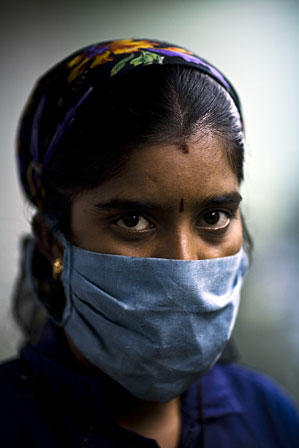
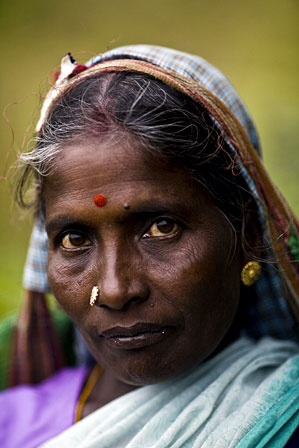
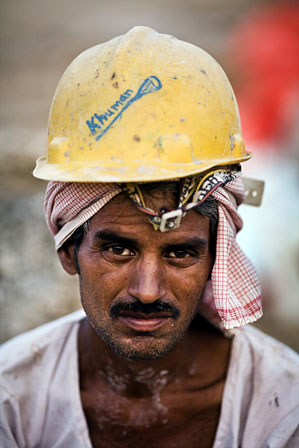
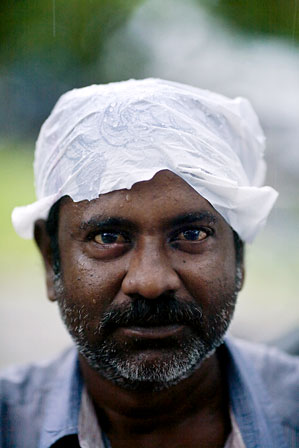
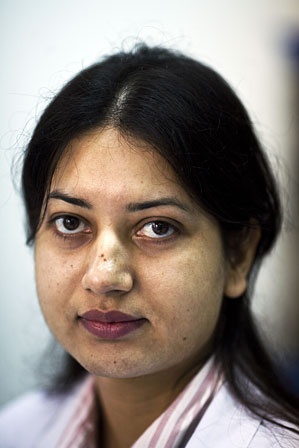
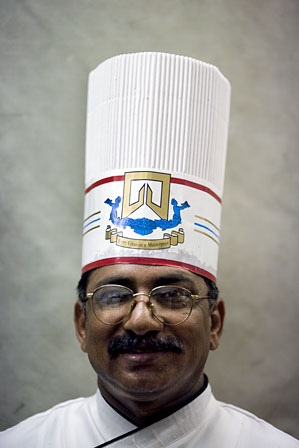
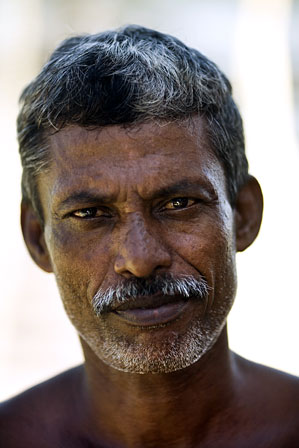
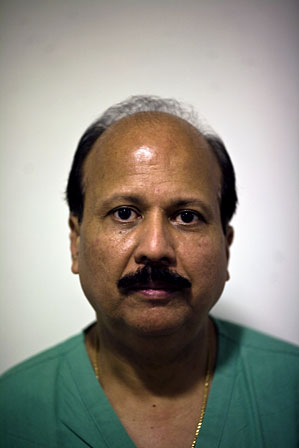
Portraits of India at work
India's 400 million workers are building one of the world's fastest-growing economies. These are images of a society on the move. Photographs by Benjamin Lowy for Fortune.

Diamond cutter.

Tea picker.
3.

Call center employee.
4.

Construction worker.
5.

Bassist, heavy metal band.
6.

Fish seller.
7.
Model.
8.

Research scientist.
9.

Chef.
10.

Business owner.
11.

Fisherman.
12.

Doctor.
13.

Infosys employee.
14.

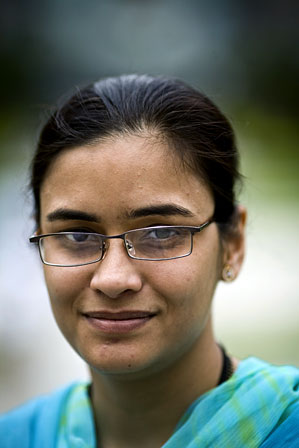
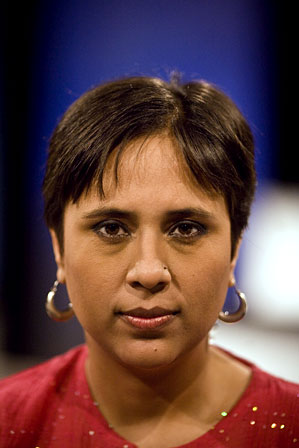
TV talk show host.
If you like it why not stumble it or subscribe to my blog for more such:)
http://money.cnn.com/galleries/2007/fortune/0710/gallery.india_portraits.fortune/index.html
Loneliness is bad (Pic)
Monday, April 28, 2008
India creates space history, launches 10 satellites at one go
Creating history, an Indian Polar rocket today succesfully put into orbit a record 10 satellites--two Indian and eight foreign-- at one go in a complex mission demonstrating the country's capabilities to launch multiple payloads into precise slots. After a textbook launch at 0923 hours from the launch pad at the Satish Dhawan Space Centre here, PSLV-C9 surged into the space injecting all ten satellites into the intended orbit within minutes of each other in an important milestone for the country's space programme.
The payloads together weighing 824 kg were the heaviest carried so far by the 230-tonne rocket. A 690-kg Indian Remote Sensing Satellite Cartosat-2A was the first satellite to be successfully put into into orbit during the 12th succesful blastoff of the Polar Satellite Launch Vehicle(PSLV)-- ISRO's "reliable and versatile" workhorse rocket.
A 83-kg Indian mini-satellite and a cluster of eight nano-satellites, each weighing between three kgs and 16 kgs, built by research institutions from Europe, Canada and Japan were the other payloads that were offloaded. " It is really a memorable moment.
The mission was perfect and for the first time, ten satellites were launched within one mission. We have set a record.
Only Russia had so far tried to launch 13 satellites in a single launch and I am not sure whether that was successful," a beaming Indian Space Researach Organisation (ISRO) Chairman G Madhavan Nair told a news conference. The launch comes ahead of India's plans to launch its first moon mission "Chandrayaan-I" expected later this year.
Launching so many satellites in a single mission is a good experience since it was quite an involved and complex task, a space official said.http://in.news.yahoo.com/pti/20080428/r_t_pti_nl_general/tnl-india-creates-space-history-launches-114a2da.html
India creates space history, launches 10 satellites at one go
Creating history, an Indian Polar rocket today succesfully put into orbit a record 10 satellites--two Indian and eight foreign-- at one go in a complex mission demonstrating the country's capabilities to launch multiple payloads into precise slots. After a textbook launch at 0923 hours from the launch pad at the Satish Dhawan Space Centre here, PSLV-C9 surged into the space injecting all ten satellites into the intended orbit within minutes of each other in an important milestone for the country's space programme.
The payloads together weighing 824 kg were the heaviest carried so far by the 230-tonne rocket. A 690-kg Indian Remote Sensing Satellite Cartosat-2A was the first satellite to be successfully put into into orbit during the 12th succesful blastoff of the Polar Satellite Launch Vehicle(PSLV)-- ISRO's "reliable and versatile" workhorse rocket.
A 83-kg Indian mini-satellite and a cluster of eight nano-satellites, each weighing between three kgs and 16 kgs, built by research institutions from Europe, Canada and Japan were the other payloads that were offloaded. " It is really a memorable moment.
The mission was perfect and for the first time, ten satellites were launched within one mission. We have set a record.
Only Russia had so far tried to launch 13 satellites in a single launch and I am not sure whether that was successful," a beaming Indian Space Researach Organisation (ISRO) Chairman G Madhavan Nair told a news conference. The launch comes ahead of India's plans to launch its first moon mission "Chandrayaan-I" expected later this year.
Launching so many satellites in a single mission is a good experience since it was quite an involved and complex task, a space official said.http://in.news.yahoo.com/pti/20080428/r_t_pti_nl_general/tnl-india-creates-space-history-launches-114a2da.html
Social Media Survey Highlights Differences Between US and Asia
A new social media study from Universal McCann published in AdWeek may come as a big surprise. It says that consumers in US and Western Europe like to watch created by others while people in Asia are more into the content creation side.
A new global study of social media use reveals that the U.S. severely lags behind Asian and South American countries in participation rates.
Consumers in the U.S. and Western Europe are more likely to be passive social-media participants -- sharing videos and reading blogs -- while those in emerging markets often create content through blogging, social networks and video and photo sharing sites.
"By and large, in the U.S. we're a country of voyeurs," said David Cohen, U.S. director of digital communications at Universal McCann, which conducted the study. "We love to watch and consume content created by others, but there's a fairly small group that are doing that creation -- unlike China, which is a country of creators."
The Interpublic Group media agency has charted a steady rise in participation rates for social media in the third phase of an 18-month research project. In its first survey, conducted in September 2006, a little over half of respondents said they read blogs. In the latest survey, over 70 percent did.
Thanks to the emergence of YouTube, watching video clips has become mainstream. While 30 percent said they watched video online in UM's initial survey, over 80 percent said they had this year. Less than 30 percent of respondents said they set up a social network profile in 2006; over 60 percent did two years later. (The survey shows big increases in nearly all online sharing activities, such as listening to podcasts, subscribing to RSS feeds and commenting on news items.)
UM surveyed 17,000 Internet users worldwide in March 2008 as part of an effort to track the global rise of consumer-generated content and online communities.
While it found social media is a global phenomenon, UM charted significant differences, mainly cultural, in terms of how people use social media.
In the U.S. and Europe, consumers are avid consumers of social content while less likely to create their own compared to other markets.
A little over 60 percent of Internet users in the U.S. said they read blogs, but just 26 percent had created one, compared to over 70 percent of Internet users who blog in South Korea and China.
Consumers in Asian countries are also much more likely to read blogs: 92 percent of South Koreans read them. In China, 88 percent read blogs.
1. Despite the popularity of Facebook and MySpace, other countries dwarf the U.S. in joining social networks. The Philippines, Hungary, Poland and Mexico all boast participation rates over 75 percent, while just 43 percent have joined social networks in the US.
2. About a quarter of Internet users in America have uploaded a video to a site like YouTube. In the Brazil, 68 percent have done so. India, China, Mexico and the Philippines all boast video-sharing participation rates topping 50 percent. The results are similar for photo-sharing, where a little under half of US consumers have uploaded photos, far behind rates in South American and Asian markets.
3. A little over 60 percent of Internet users in the US read blogs, but just 26 percent had created one, compared to over 70 percent of Internet users who blog in South Korea and China. Consumers in Asian countries are also much more likely to read blogs: 92 percent of South Koreans read them. In China, 88 percent read blogs.
http://www.adweek.com/aw/content_display/news/digital/e3i1e3d5e92979d92c17402564896ea6816
How To Get A YES When Asking For A First Date
Asking someone out on a date is not rocket science, but for some people it can be very overwhelming, especially when asking somebody out for the first time. By following the tips below you can help increase the odds of getting a YES when asking someone out on a date.
1. For starters you should wait for a relaxing environment when asking someone out for a date. Never make that move in a tense environment. Everything should just flow smoothly.
2. Do not pop the question out of nowhere. The conversation should naturally lead into asking someone out for a date. For example, it would be ideal for both of you to have just finished talking about something that you both are interested in which brings comfortability and then an "Oh by the way..." is a perfect opportunity to ask for a date.
3. Be sure that when you ask out somebody for a date try to do something that you enjoy doing and are good at. This will increase your confidence both when asking them out on the date and during the actual date. Confidence attracts people towards you.
4. If you did get that first date then your next job is doing all of the right things to get the second date, right? So while on that first date be sure to have the attitude of giving rather than getting. Try to involve activities that he or she would enjoy. Do your best to create the date around them, showing your attention, and making them feel special.
5. Last but not least, just be yourself when asking him or her out on a date. Do not try to act like someone else or pull those one liners. Trust me, being original works every time!
Leave ur comments If you want to add more tips:)
Sex And The Classroom
The boys in my class often pinch the girls' chests," says a seven-year-old to his elder sister. "But there's nothing there," she replies, trying to sound normal. "Of course there is, some girls' chests are so big," says the second-grader.
"He goes under the chair and puts his hands up our legs," says a nine-year-old, giggling, to her cousin, referring to her classmate and neighbour. The offender is asked, "Why do you do that?"
"I was just searching for my eraser that had fallen under her chair. She refused to move her legs aside," he says, looking confused.
"You don't have what we do. You just have a hole between your legs," gloats an 11-year-old to his younger sister.
"I dropped my pencil," announces a 12-year-old boy in class. "You dropped your pencil?" is the echo from his classmates, accompanied by coughs and sniggers. Pencil, of course, does mean something else here. "Ok ok, I dropped my stationery pencil," says the boy. Pen and pen-cap, pencil and pencil-box, pencil and sharpener, these objects of everyday use suddenly become passwords of an exciting and forbidden world. "Pass the ball" is another line designed to send everyone on the field into paroxysms.
While boys have been caught masturbating in school loos, one eighth standard boy who stayed behind in class during the break to do his homework, received an education of another kind—the girls in the class drew a nude female on the blackboard, with a penis coming out of it.
"My friends would often talk about ejaculation when I was in the fifth standard, and I used to wonder what it was. The way they talked, I wanted to move away. It all felt filthy," recalls a ninth standard student. "In fact, one of my friends always gets strange dreams when we talk about all this. She feels really insecure. But she doesn't know whom to talk to about it."
'Slut' and 'prostitute' are common abuses that boys give girls, says a 13-year-old. Why isn't all this being reported to teachers? "Because you immediately become unpopular."
Considering the realities of Indian classrooms today, the recent uproar of Maharashtra's MLAs against the state government's plans to introduce sex education in schools is based on an obsolete fear—pollution of young minds. That the government has now frozen its ambitious plans is unfortunate in a country where sexual intelligence is abysmal. A gynaecologist who has given talks on sex education to school and college students says that there is an appalling ignorance in adolescents and even the older youth about menstruation, pregnancy and contraception. "Science students at least learn about the reproductive system at some stage. Arts students are absolutely ignorant." In her practice, first in KEM hospital and then in her own clinic, she has seen cases of teenage pregnancy where the girl, unaware that she is already two months pregnant, cannot even explain how it happened. "He did something," is the common explanation.
She has found similar ignorance in newly married couples, aged 18 or 19, who suddenly find themselves expecting their first, unwanted child. "No one told us what to do," they say when questioned about family planning. Harsh Sadani, founder-member of MAVA (Men against Violence and Abuse), who, along with other activists, has been persuading the Maharashtra government to introduce "sexuality education" in schools, points to these statistics of the Family Planning Association of India: 31% of girls and 33% boys in the age group of 12-19 years get married, while 60% of married girls (aged 15-19 years) have unwanted pregnancies. 48% school boys and 39% girls face some form of sexual abuse (ranging from inappropriate touch, exposure to pornography or violent sexual assault). The age of maximum abuse is between nine and 12 years, according to the National Study on Child Abuse 2007 by the Ministry of Women and Child Development. "Children must learn to say NO," says Harsh. "Girls, of course, need to learn it, but so do boys, to resist peer pressure to perform any sexual act, watch blue films, or to go to sex workers. They need to learn to respect each other's bodies."
The young have been vocal about their confusion in sexual matters. "We should have someone to talk to, who can penetrate our minds," says a 14-year-old. "We cannot talk about this with our mothers. How do we frame the question?" As a consequence, Mumbai Mirror's 'sexpert' column is a hit with school kids, who can barely comprehend the situations being spoken about. When caught reading the column, schools simply inform the parents. The uncontrolled sexual energy of adolescents leads to incidents that ruin lives. MMS clips of unsuspecting school girls that are passed around by their classmates and eventually released into the internet space, is a cruelty that is birthed in a male adolescent desperation. Schools need to address such issues.
With sex in the air all around them, every relationship is seen by schoolkids as unnatural, but exciting. A seventh standard teacher says that she has to think really hard when children in her class report to her that so-and-so 'loves' so-and so. "I've told them one can love many people; don't we all love our family? Love is not a bad word." This is probably as far 'sex education' can go in this country. But, obviously, children need more guidance than this. Mumbai's lawmakers simply do not comprehend the enormity of the issue.
http://timesofindia.indiatimes.com/Sunday_Specials/Sex_And_The_Classroom/articleshow/2986931.cms
10 Interesting Topics of Conversation for Every Occasion
Don't panic! You can be interesting. Interesting topics of conversation needn't be difficult to come think of. Think about this - what makes a topic interesting? Isn't it that people like to talk about it and that they have opinions on it?
Once you realize that, you'll see that for interesting topics of conversation come from everyday life and things that we all have in common. Then you'll realize it's not so difficult to think of them.
Don't think you have to be controversial and go for risky topics like politics and religion; you don't. In fact, to do so would be a mistake.
Whatever topic you choose should make people relaxed and happy to talk; controversial subjects don't do that. Think instead about what all people share: families, hopes, dreams, experiences etc.
Here are a few interesting topics of conversation to get you started:
1. Who is the most interesting person you ever met? You can see how this would easily lead people to voice opinions and ask 'why?'.
2. Where in the world would you most like to visit? This dream location may be shared by others and so it makes people feel solidarity, but also, people will be itching to ask 'why?' and keep the conversation flowing.
3. What has been the most life-changing experience you've ever had? Here, people can share funny and touching stories if they want to, which will help you get a deeper understanding of them. Likewise, if people don't feel relaxed enough to give a heart-felt reply they can answer in a funny way and it all adds to the conversation.
4. What is the most spontaneous thing you've you ever done ? That opens the door to all sorts of funny and romantic stories.
5. Who's had the biggest influence on your life? Because this person has influenced the person you're asking, they must view them positively and have strong ideas about them. That means they're likely to enjoy talking about them.
6. What thing that you haven't yet done would you most like to do? This kind of inspirational question always gets people talking and everyone's usually happy to chip in with comments about people's hopes and wishes. Just be careful when commenting that you don't rain on their parade. It's their right to have whatever hopes they want.
7. What is the best quality you've inherited from either of your parents? This is particularly interesting at a family gathering when people know the parents you're talking about. It's also a bit of a bonding experience, speaking favorably about your parents.
8. From which person have you learned most in your life? This is another uplifting, positive topic of conversation that usually gets people talking.
9. What historical figure do you most identify with? This lets you know something about the other people around you; it also opens up discussion of the events these historical figures were involved in. Yes, potentially it takes you into dangerous waters of politics and religion but people usually take this question in the spirit of fun in which it's meant, so potentially awkward moments are easily averted.
10. What kind of music do you like? You could then go on to talk of CDs you've bought or gigs you've been too. You might even ask - 'what's the most embarrassing album in your collection?' That's usually met with all-round hilarity!
These ideas should show you that interesting topics of conversation don't need to be complex or intellectual - in fact, the more ordinary the better, because then people feel qualified to talk about the topic.
Dawood 4th 'most wanted' criminal on Forbes list
The latest Top 10 list released by Forbes features the world’s most dreaded criminals, in a major departure from the magazine’s usual practice of listing the planet’s rich and famous.
India’s very own Dawood Ibrahim has found a place in the list — at number four.
The "international most wanted" roster is headed by al-Qaida chief Osama bin Laden and includes others like Mexican drug lord Joaquin Guzman, Russian mobster Alimzhan Tokhtakhounov, the man behind Rwanda genocides Felicien Kabuga and Italian mafia’s playboy Matteo Messina Denaro.
Rounding off the list are Colombian cocaine lord Pedro Antonio Marin, Ugandan guerrilla commander Joseph Kony, leader of the Winter Hill Gang in US James "Whitey" Bulger and kingpin of the Persian organised crime family in Canada Omid Tahvili.
Forbes.com, which has come up with the list, claimed to have consulted law enforcement agencies in the US and around the world to identify the top ten.
"They (listed criminals) are all accused of a long history of committing serious crimes and are considered a dangerous menace to the world," it said.
Though all of them have already featured on one or the other wanted list, ranging from their countries’ list to Interpol, the Forbes initiative appears to be a step in highlighting their extent as international criminals given "the current state of globalized crime".
Referring to the Forbes list, former CBI director U S Misra told TOI, "It will have some impact on the countries which have been harbouring such criminals for political reasons. These lists will put pressure on such countries which will have to answer their own people in due course for giving shelter to the fugitives."
Misra, a former Interpol vice-president, said details of such fugitives, including their possible hideouts in a particular country, will tell the world how the country concerned was not cooperating with Interpol by failing to deliver on the promises made to the global police body.
The Forbes list has, in fact, mentioned the possible hideouts of Dawood (in Pakistan), Osama (in Pakistan’s Waziristan region) and others — reflecting the law enforcement agencies’ assessment of the area of operations of these criminals and their shelters. The list also found support from Interpol secretary general Ronald Noble who told Forbes.com, "What they all have in common is that whether their crimes have occurred principally at the national or international level, their crimes have been so significant that they should be pursued globally."
He added, "With regard to the world’s most wanted criminals, it is always easy to see the tremendous local impact that their crimes have had."
Forbes said it would periodically review the list — the way it does for its lists of billionaires and others. "Forbes will periodically review the list to determine whether a replacement is warranted and will scratch off those fugitives who are put out of action," it said.
http://timesofindia.indiatimes.com/India/Dawood_4th_most_wanted_criminal_on_Forbes_list/rssarticleshow/2988914.cms
Friday, April 25, 2008
Top 10 Online Video Conversion websites
1. Zamzar
URL: http://zamzar.com/url/
Zamzar is a free online file conversion dedicated to transforming songs, videos, images and documents into different formats. With this service the focus is on high-quality file conversion for as many file formats as possible. The basic free service lets you converting files up to 100MB each. In case you are an online video conversion freak and "want more Zamzar" you can signup for basic, pro or business account and get to convert larger files (up to 1Giga!), a personal inbox for online file storage and faster file conversions (pricing and signup here). Nice and clean interface design. Fun to use.
2. Mux
URL: http://beta.mux.am
With a somewhat over-texted design but still simple and easy to use interface Mux is a new beta service allowing you to convert media files from major player websites such as youtube, dailymotion and google and download to your computer. Here you can also share it privately with friends & family or send it to your mobile phone.
3. Vixy
URL: http://vixy.net
This online flv converter lets you convert Flash video files and download them in avi, mov mp4, pm3 or 3gp container formats encoded with mpeg4 codecs. The site claims to be doing that faster and less lossy than a typical transcoder. The service is based on an OpenSource engine named FLV to MPEG4 Conveter. In case you are a serious geek and knows your way around you can even download the project source code via their svn subversion.
4. VideoCodeZone
URL: http://www.videocodezone.com/conversion.php
Convert Flash video files from Youtube, MySpace, Google Videos, IFilm, Break, Dailymotion and Metacafe to popular formats and download them to your computer. Copy and paste the URL of the video, select the output format and click Convert/Download. To convert local Flash video files select the file and click Convert/Download.
5. MediaConverter
URL: http://www.mediaconverter.org
Multi-file type converter and splitter supporting video, sound, ringtones, images and documents: not just of popular audio / video files such as mp3, wmv, 3gp, flv, swf, mov, avi, mpg, mp4, divx, ipod, psp and ogg but also picture formats like jpg, psd, doc, pdf, rtf, txt, odg and even abandoned formats as WordPerfect (...?). Check File mode, click Browse, choose the file and hope for auto-detection to work. If auto-detection fails, select input format and output format, submit the form. To convert a file from the Internet check URL mode, enter the file URL, select input and output format and go.
6. ConvertDirect
URL: http://www.convertdirect.com
Online flv converter for Flash video files such as those used by Youtube. Supported output formats include avi, 3gp, mp3, mp4, wmv, mpeg, mov and psp. You can watch your vids on PC, iPod, Zune, PSP and various mobile phones.
7. MovAVI
URL: http://online.movavi.com
Other than requiring no software to install (that's true about everyone on this list) the guys from MovAVI are also proud of the fact there are no ads on their site to interrupt you while you are enjoying their free service. Add up to 5 files limited to 10 min each and 100 Mb total size. Enter your email address and MovAVI will notify you when your files are ready. There is also a cool feature allowing you to merge your files videos into one large movie.
8. Flvix
URL: http://www.flvix.com
Youtube Google Video dedicated online flv converter. Flvix comes from the folks who do Pingoblog, a cool ping service for bloggers. Very simple yet efficient interface. Converts Youtube and Google videos and serves them for download in avi, mov, mp4, 3gp and mp3 formats for PC, Mobile phones, iPod and PSP.
9. All2Convert
URL: http://www.all2convert.com
Online video converter. Copy video link, paste it in the URL video box, choose video format and press Convert. Wait for your converted video link to show up and download. Supports 3gp mobile phone format as well as iPhone and Zune videos, iPod, PSP and popular PC formats as dvd, mov, mp4, vob, rm and wmv.
10. ConvertTube
URL: http://converttube.com
Youtube dedicated online flv converter. Allows you to convert Flash video files as used by YouTube to popular PC, iPod, PSP, iPhone and mobile phone formats such as wmv, mov, mp4, mp3 and 3gp. Same as Vixy, this service also claims to be doing its job faster and less lossy than a typical video transcoder.
http://www.cultcase.com/2008/02/get-your-own-copy-top-10-online-video.html
Thursday, April 24, 2008
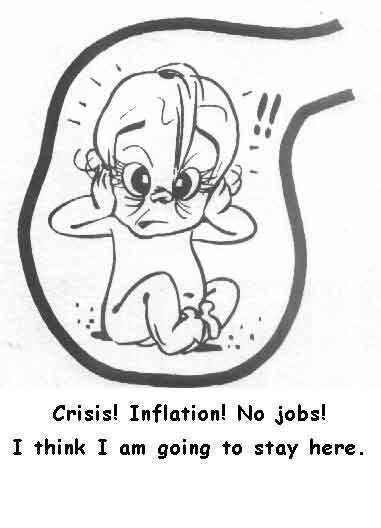
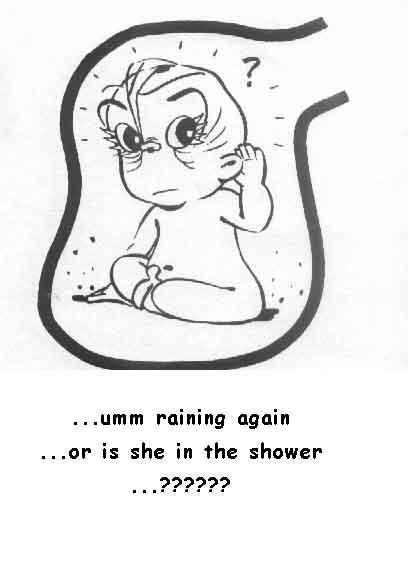
What babies do inside the womb?
The pictures are so cute.The imagination of whoever created these pics is worth admiring…Check this out


If you like it subscribe to my blog via rss OR via email :)
Indian companies give multinationals a run for their money
India has the second highest number of home grown companies that equally compete with multi national conglomerates, says a report put out by the Boston Consulting Group. India, which is second only to China had 11 companies that made it to the list, against China's 15. The report ranks 10 rapidly growing economies that are leading their markets and and fending off fierce competition with innovtive business models.
The report said that common signs of leadership amongst the companies were their ability to customise products and services to meet different requirements of the consumers. While technology and globalisation was on their side, the report said that the home grown companies have often found low cost innovative ways to go national allowing them to take the lead.
Indian companies which gave large international corportate champions a run for their money included Bharti Airtel - which maintained its leadership in the booming telecom market by taking on Hong Kong based Huchison Telecom, which was later sold to Vodafone. ICICI bank, India's largest private bank, beat competition from Citibank, HSBC andStandard Chartered. While GCMMF which markets dairy products under the Amul brand fended off Cadbury, Nestle and Unilever successfully. IT education and training major left US based Lionbridge behind. and Tata's Titian is way ahead of Japan based Citizen and Swiss Swatch.
http://www.india-briefing.com/node/112
101 Health and Wellness Tips for College Students
Between exams, papers and maintaining an active social life, many college students feel they can't really find the time to keep up on their personal health and wellness until an illness catches hold and stops them in their tracks. With most colleges providing health care and endless physical activities for students, staying healthy in college is about as easy as it will ever get. Here are a few tips to help students make the most of the resources at their fingertips and to ensure they stay healthy and illness free throughout their education.
Diet
Withiout careful attention to your diet, you could end on putting on the freshman 15 and more. Follow these tips to help keep your diet healthy and beneficial.
- Learn proper portion size. To avoid eating too much of even the healthiest foods, keep track of how much you're eating. For most people, meat servings should be about the size of a deck of cards and other servings vary by the type of food. Check out recommended amounts here.
- Vary your meals. When the cafeteria has your favorite foods daily it can be easy to return to those old favorites every day. Changing up your diet from day to day is an important part of good nutrition so take advantage of the variety of selections available to you.
- Eat breakfast. Start your day off right with a good meal when you get up. Whether you're rolling out of bed at noon or up at the crack of dawn for class, make sure you start your day with a balanced, healthy meal.
- Keep healthy snacks around. It's easy to eat healthy if you keep the Cheetos at bay and stock your dorm room with fruits and other healthy snacks. You'll be more likely to reach for these than junk food if you keep them nearby or in your backpack.
- Drink moderately. While college students are known for their partying, you can still have a good time without consuming all the calories that come along with binging on beer, plus you'll avoid the hangovers and other negative effects. Drink in moderation and you can have a good time without hurting your health.
- Don't fight stress by eating. It can be tempting to reach for a bag of chips or some cookies when you're stressed out about an impending exam. Eating won't help your stress go away, so avoid filling up on snacks. Try working out or taking a break instead.
- Drink water. Drinking enough water can help boost your concentration as well as keep you from overeating. Make sure to keep hydrated as you go through your day by bringing water with you.
- Limit sugary and caffeinated beverages. Beverages may not fill you up, but they sure can help fatten you up and have a detrimental effect on your overall health. You don't have to completely give up soda and coffee, but you should scale back in order to keep yourself in tip top shape.
- Try to eat fruits and veggies. Even if fruits and vegetables don't comprise some of your favorite foods, try to incorporate at least a few of them into your diet each day.
- Limit junk food. Junk food is fast and easy and many students end up eating a lot of it while they're on the run to class or to work. While a little fast food now and again won't really hurt you, make sure it doesn't become a habit.
- Make it convenient to eat right. Don't make it hard for yourself to eat right. Buy healthy foods and stock your fridge and room with them to ensure they're the first things at hand when you get hungry.
- Don't skip meals. With so much to do, it's easy to forgo eating to run off to class or the library. Don't skip meals. Set up foods you can eat on the run so you'll have the energy to keep going.
- Indulge every once in awhile. A little treat now and then is a great way to reward yourself for eating a healthy diet. Give yourself a break and indulge in a food you love but can't eat all the time.
- Take vitamins. If you feel like you aren't getting the nutrition you need from your diet, don't hesitate to supplement it with some multi-vitamins to stay healthy and illness free.
- Get help for eating disorders. While many groups focus on helping students lose weight, there are those who need help fighting eating disorders as well. If you are worried you have an eating disorder and want help, don't be afraid to reach out to campus resources for help.
Exercise
Fitting exercise into a busy schedule isn't always the easiest thing, but take stock of some of these tips to help you get on track to fitness.
- Stretch first. Help yourself avoid injuries by stretching each time you exercise. Simple stretches before and after you work out or engage in physical activity can help keep you active and pain free.
- Ride your bike. Instead of taking the bus or driving to class, try biking instead. It will give you a few minutes of exercise between your courses.
- Play a sport. One way to get yourself motivated to exercise is to make it a game by playing a sport. Join an intramural team or play recreational sports through your school to get active and have fun at the same time.
- Use safety equipment. No matter what sport you're playing, make sure to always use the proper safety equipment. It will keep you from getting hurt which will allow you to stay active more often.
- Head to the gym. Most schools provide students with gym facilities they can take advantage of for free. Head to the gym between classes or when you get up in the morning to squeeze in a workout.
- Take advantage of fitness courses. Along with gym facilities most students will have access to fitness classes they can take. Since you're already paying for these through your tuition you may as well take advantage and get a workout that will help keep you in shape and motivate you.
- Walk to class. While taking public transportation might be quicker, walking will give you a chance to stretch your legs, burn some calories and relax before your next class.
- Incorporate different kinds of exercise in your routine. When you work out, don't just stick to one kind of workout. Incorporate strength training, cardio and stretching exercises into your routine to make it well rounded.
- Make it fun. You're probably not going to work out if you are bored with your routine or find going to the gym torture. Find a way to make it fun for yourself and you'll be much more likely to keep it up.
- Bring a friend. With someone else relying on you showing up, you'll be much more likely to make the effort to work out. Plus, working out with a friend can be a great way to make working out more fun.
- Take advantage of open spaces. Most colleges are equipped with large grassy quads or arboretums with trails you can walk on. Take advantage of these spaces to take hikes, play frisbee or just walk around.
Sleep
College students aren't exactly known for their early to bed early to rise attitudes, but getting sleep is an integral part of staying healthy. Check out these tips to help you make sure you're resting enough.
- Take a nap. If you have the time during the day, a short nap can do wonders for your energy levels. Just make sure not to nap too close to bedtime or for too long, and a nap will do your body good.
- Don't work in bed. Working in bed can make getting to sleep harder. Keep your work space separate from your sleep space to keep insomnia at bay.
- Get a full night's rest whenever possible. While the amount of sleep each person needs varies, most people need 7-9 hours to feel fully rested. While this may not be possible every night, try to sleep a full night whenever you get the chance.
- Stick to a schedule. With different classes and work hours each day, it can be hard to stick to a schedule, but keeping sleep times similar from day to day can greatly improve your chances of getting a good night's sleep.
- Understand that lack of sleep can have a big impact. Lack of sleep doesn't just make you cranky, it can also reduce your ability to concentrate and to excel at class, so try to get as much sleep as you need.
- Work out bedtimes with roommates. When sharing a room with someone it can be hard to go to bed when you need to and not get woken up when you don't want to. Try to work with your roomies to make sure you each get the sleep you need.
- Avoid all nighters. While you may feel like you need to study all night to do well you might be doing yourself a disservice. Not getting enough sleep can impair your ability to do well, regardless of how much you've studied, so make sure you get at least a little sleep before your big test.
- Create a bedtime routine. If you have trouble falling asleep at night you can help yourself by creating a routine that will let your mind and body know that bedtime is approaching and that it should get into sleep mode. After a few weeks of practice this should help you fall asleep when you need to.
- Avoid caffeine, eating and drinking right before bed. All of these activities can throw off your body's internal clock, so try to limit meals, alcohol and caffeine consumption to a few hours before bed.
- Keep your room dark and quiet. While college campuses are hardly either, try to keep your room as dark, quiet and cool as possible. This will help trigger to your body that it's time for bed and help you get and stay asleep.
Sexual Health
College is a place where many students choose to explore their sexuality. Students can do this safely by following these tips.
- Get tested. Protect your sexual health by getting tested for STDs annually or even more frequently. Most schools offer these tests for free or at a low cost, so all students, even those with small incomes, can afford the tests.
- Always use protection. Unless you are in a long-term, monogamous relationship with a partner who has been confirmed STD-free, always make sure to use protection to prevent the risk of contracting a disease.
- Discuss issues with your partner. Sex shouldn't be painful or scary. If you are nervous or uncomfortable with any element of your sexual relationship, make sure to bring these things up with your partner or health care provider to ensure things are emotionally and physically ok.
- Get regular exams. Whether you're male or female, getting your equipment checked out regularly is a must. Women can get breast exams and pap smears that can greatly reduce their risk of cancer.
- Take advantage of vaccinations. Many schools now offer the HPV vaccination. Female students can take advantage of these to reduce their chance of contracting the HPV virus, the leading cause of almost all cervical cancers.
- Attend informational classes. Most colleges offer classes that discuss sexual issues, so you can educate yourself and learn to stay healthy and happy.
- Find someone to talk to. Many students in college have questions about their sexuality and some even feel confused. It helps to find someone you can trust to talk to in order to help you find some direction and figure out who you really are.
- Don't do anything you're not comfortable with. While you may feel pressure from a partner or even those around you to engage in certain sexual activities, never do anything you aren't completely comfortable with. It's your body and you are in charge, don't let anyone else tell you otherwise.
Illness
With communal living and thousands of other students sharing classroom space, spreading colds and viruses is easy if you're not careful. These tips can help keep you from getting sick.
- Wash your hands. Studies have shown that simple hand washing can help prevent a large number of illnesses. So wash your hands, especially any time you'll be touching your nose, mouth or eyes or if you've been around others who are sick.
- Avoid sharing beverages. Germs are easily spread through the sharing of drinks, alcoholic or otherwise, so get your own and avoid sharing with friends.
- Don't go to class. If you're sick, don't force yourself to go to class. It will only make you feel worse and infect other students. Email your professors that you're ill and stay home and rest.
- Get to the doctor. If you have symptoms that aren't showing any signs of clearing up within a few days, you may need to take a trip to the campus clinic or your doctor. Simple illnesses can mutate into much more deadly and dangerous ones if left alone so make sure to seek help if you aren't feeling any better.
- Drink lots of fluids. Colds and flues can wreck havoc on your body, often depriving it of much needed fluids. Replenish these by drinking plenty of water or energy drinks when you're ill.
- Get a flu shot. With so many germs around, sometimes getting a flu shot is the best thing you can do to avoid getting sick. Many colleges offer these for reduced prices so students can get vaccinated for little out of pocket expense.
- Wear flip flops in the shower. Dorm bathrooms are generally cleaned daily, but can become dirty quickly with so many students sharing them. Always make sure to wear sandals in the shower to avoid getting viruses and bacteria that can cause warts and athlete's foot.
- Avoid ill friends. If your friend is sick, try to avoid spending too much time around them. While bringing soup or medications won't hurt, touching ill friends and their stuff can increase your chances of getting sick yourself.
- Don't touch your eyes, nose or mouth. If your hands aren't totally clean, try to avoid touching these areas. The membranes in these areas make it easy for bacteria and viruses to enter your body.
- Try simple over the counter remedies. Most viruses leave you feeling miserable but with no recourse in medications that can make them go away. Try out over the counter remedies to help ease your symptoms.
- Keep immunizations up to date. While most students will have been immunized as a child, some shots may need to be updated when you enter college. Make sure yours are up to date to keep you from contracting a serious illness.
Stress
Students can get run down with so much going on. These tips can help you beat the stress.
- Create a routine. If you get yourself in the habit of studying, working out, and sleeping at certain hours, it will be easier to fit in all the things you need to do in a day without feeling too stressed out.
- Put limits on work hours. You can't work all the time-fun and relaxation have to be part of your routine as well. Limit the times when you will work to give yourself time to sleep and rest up so you won't get sick.
- Give yourself a break. If you've been working steadily for hours, give your eyes and mind a chance for a rest by taking a break. You can come back feeling more refreshed and ready to go.
- Be realistic. Sometimes there's just no way you're going to get done everything you'd like to in one day. Be realistic about your goals and understand that you can only do so much.
- Understand you can't do everything. While you might want to go to class, work, play a sport, and participate in clubs and social activities, the reality is that sooner or later you're going to get run down by trying to do so much. Focus on doing the things you truly love and forget about the rest.
- Get help. If you're feeling overwhelmed, reach out and ask for help from professors and friends. They may be able to give you more time or help you to complete projects and studying more quickly.
- Take advantage of campus meditation and yoga programs. Many campuses are equipped with programs that can help students get a release from their stresses through a relaxing session of meditation.
- Cut back if needed. Sometimes students overwhelm themselves with everything they have going on. If you're feeling like you've got too much on your plate, cut back work hours, drop a class or cut out some extracurricular activities to make your schedule more manageable.
- Relax with hobbies. Whether you like to paint or to destroy aliens with your friends in video games, making time for the things you love is an important part of keeping yourself from getting too stressed out.
- Give yourself plenty of time. It's easy to put off starting on a big project or studying for a test until the last minute. You'll be much less stressed out, however, and will likely do better if you give yourself more time to work on it.
- Spend time with friends. There are few things that can cheer you up like being around the people you like most. Eat dinner with friends or just hang out and watch tv or take a walk to get away from the stress of homework.
- Don't let yourself get run down. With so much to do, it's easy to get run down. If you feel yourself getting stretched too thin, take a step back and evaluate everything you've got going on to determine what's really important.
- Learn time management skills. Time management skills will make everything from getting assignments done to managing work a lot easier. Read a book or check out advice on the internet to help you better manage the hours of your day.
Mental Health
College students are in a high risk group for depression, so make sure you keep yourself happy and healthy with these simple tips.
- Don't be afraid to ask for help. Many people feel embarrassed or ashamed to ask for help with their depression but this is unnecessary as it's a common and treatable problem that you don't have to deal with alone. Tap into campus resources to find help or tell a friend how you're feeling.
- Keep in touch with family and friends. You can help beat homesickness and loneliness by keeping in touch with friends and family members.
- Build new friendships. A big part of the college experience is meeting new people and forming new friendships so get out there and meet new people whenever possible.
- Expect things to change. Things will change both at home and in your school life, so expect things to change over time. You will grow and so will the people around you.
- Understand that it may take time to fit in. Most people don't make best friends on the first day of college. It takes time to build friendships, so don't get discouraged if you don't fit in right away.
- Don't let stress get the best of you. Stress can be a major factor in many students' depression. If you're feeling stressed out make sure to take a break and set aside time to relax.
- Realize you don't have to please everyone. There is no way that you can make everyone happy all the time. Concentrate on making yourself happy first and you'll cut out lots of stress and hassle from your life.
- Know the signs of depression. It can be hard to differentiate a simple slump from serious depression so learn the signs of depression not only for your own benefit but for the benefit of your friends as well.
- Build on your confidence. If you know you're good at certain things build on the confidence you take from these activities rather than concentrating on your faults.
- Find strength in numbers. You may have an easier time feeling good and fitting in if you find a group of students who share similar interests and values as you.
- Volunteer. Sometimes volunteering can give you a sense of satisfaction you can't get from work or class work, so get out there and help others in your community.
- Get involved on campus. Joining clubs and social groups on campus can help you to meet new friends and keep you from feeling lonely or isolated.
- Set goals. You'll be more motivated and positive if you give yourself goals to work towards throughout the school year.
Study Abroad
Before you embark on a study abroad program, take a look at these tips to keep yourself healthy at home and overseas.
- Get immunized. If you're traveling to a country where you run the risk of getting a serious communicable disease, make sure to get vaccinated before you go. It can save you a lot of pain and serious complications in the future.
- Ensure you have access to necessary prescriptions. If you have medications you need regularly, ensure you get these before you leave or that you have a place where you can get refills while you're away.
- Get a check up before you go. It doesn't hurt to get a check up before departing on a trip to make sure you don't have any hidden illnesses or medical conditions that could affect you away from home.
- Avoid raw foods and water that seems suspect. While water and food will likely be safe in most places you will visit, it's better to be safe than to get a serious food bourne illness.
- Consider travel insurance. In case something does go wrong when you're away from home, you can invest in some travel insurance which can give you advice and treatment just about anywhere.
- Bring a travel first aid kit. Bringing a small first aid kit with you on your travels can be a great help to you if you get a small injury. With the kit you'll be able to take care of it yourself and you won't have to hunt for a place to buy antiseptics and bandages.
- Take precautions to avoid diseases like malaria. In some areas of the world, students will run the risk of contracting potential serious illnesses like malaria. By avoiding wet and waterlogged areas at night and using mosquito netting and repellant, students can help reduce their risk significantly.
- Avoid contact with animals. While household pets may be safe to interact with, many wild animals or those found on the street can carry diseases. Students can avoid contracting them by limiting their contact.
- Be careful when swimming. Drowning in the most common cause of death for overseas travelers, so ensure that you're a strong enough swimmer before diving into the place you're swimming and stay near lifeguards and other swimmers.
- Get advice from doctors on pre-existing conditions. If you have conditions like diabetes or heart problems, make sure you check with your doctor before departing to make sure you'll have the tools and help you'll need to stay healthy while away.
Miscellaneous
Here are a few other tips to keep you a healthy and active college student.
- Avoid walking to class in flip flops. While they may keep your feet cool and look good with your summer wardrobe, few flip flops provide the support needed for your feet. If you are walking long distances, it's best to leave the sandals at home and avoid the arch pain and pinching associated with them.
- Keep backpacks from being too heavy. An overfilled backpack can hurt your back and leave you with some serious back and shoulder pain later. Make sure your backpack is properly fitted and avoid carrying around more than you need.
- Quit smoking. No matter how much you may love the sweet thrill of a nicotine rush, the reality is that smoking just isn't good for you or anyone around you. Quit as soon as you can to save your lungs, heart, teeth and years of your life.
- Don't drink and drive. If you do overindulge in drinking, make sure not to get behind the wheel. Call a cab or get a sober friend to take you home instead.
- Make sure you have emergency contacts. In case something does happen to you, make sure that the school and those around you know who to contact to get those you care about to you when you need their support.
- Wear sunscreen. College kids on spring break aren't usually the first to whip out huge tubes on sunscreen to slather on. While getting a tan may prove you spent your break on a beach, it can also be a source of skin cancer, so make sure to protect yourself.
- Ensure that your medical insurance covers physicians in the area. If you aren't going with your school's insurance plan, make sure that your parent's or your own insurance covers doctors in your area.
- Monitor existing health conditions carefully. If you leave for college knowing you have a pre-existing medical condition, make arrangements to ensure that it's properly monitored while you're at school.
- Be aware that health concerns differ for men and women. While men and women's anatomy is similar in many ways, some things that seem like they should be the same simply aren't. Educate yourself on the sex-specific aspects of wellness to keep yourself healthier and to know what to watch out for.
- Assert yourself. Don't let anyone make health or wellness decisions for you that you feel uncomfortable with. If you don't want to eat that donut or have a drink, then don't.
Wednesday, April 23, 2008
New News aggregator site 'YoIndya' launched from BestofIndya
Amazing news Aggregator site www.yoindya.com launched by one of top Indian social bookmarking site www.bestofindya.com .
Amazing news aggregator where one can find actual information related to India. The site covers videos,pictures,news,top news from other social bookmarking sites like Indianpad etc.
so keep visiting :)
Secularism in India exposed (must watch)
Leave your comments also
Canadians among worst polluters on earth
Canadians may have enthusiastically showed their solidarity for the Earth Hour held last month but a latest study says that they are among the worst polluters in the world.
Twenty-four cities across the world participated in the Earth Hour at 8 p.m. March 29 by turning off lights and electric appliances for one hour to cut carbon emissions and save energy.
According to the study released on Tuesday by Statistics Canada to coincide with Earth Day, Canada is the world's third largest polluter per capita after Australia and the US.
Interestingly, Canada was the birthplace of the world's green movement.
The study says each Canadian generated 23 tonnes of greenhouse gases in 2005 as against 24.4 tonnes by an American and 27.7 tonnes by an Australian.
“They are markedly higher than those in Germany (12.1 tonnes), the United Kingdom (10.9 tonnes), Japan (10.6 tonnes) and France (9.2 tonnes),” it says.
In 2005, Canadians, through human activities, emitted greenhouse gases equivalent to 747 mega tonnes of carbon dioxide into the atmosphere.
One mega tonne equals one million tonnes and driving a mid-size car about 5,000 km generates one tonne of emissions, the study says.
With just 0.5 per cent of the world's population, the report points out, Canada accounts for two per cent of the global greenhouse gas emissions.
Because of its resource-based economy and cold climate, Canada's greenhouse gas emission levels have gone up by 25 per cent since 1990. As a result, the country is getting warmer.
“The trend between 1948 and 2007 shows a 1.4 degree Celsius increase in annual temperatures in Canada,” the study says.
Glaciers in the beautiful Rocky Mountains in western Canada are receding, resulting in more dry months in some rivers.
The current Conservative government has promised to cut the emission levels by 20 per cent by 2020.
http://sify.com/news/fullstory.php?id=14654909Three reasons why India is awesome
Tuesday, April 22, 2008
Types of Girls From An Eye Of Geek
Hard Disk Girls:
She remembers everything, FOREVER.
RAM Girls:
She forgets about you, the moment you turn her off.
Windows Girls:
Everyone knows that she can't do a thing right, but no one can live without her.
Screensaver Girls:
She is good for nothing but at least she is fun!
Internet Girls:
Difficult to access.
Server Girls:
Always busy when you need her.
Multimedia Girls:
She makes horrible things look beautiful.
CD-ROM Girls:
She is always faster and faster.
Email Girls:
Every ten things she says, eight are nonsense.
Virus Girls:
Also known as "WIFE"; when you are not expecting her, she comes, installs herself and uses all your resources. If you try to uninstall her you will lose something, if you don't try to uninstall her you will lose everything.
Monday, April 21, 2008
Google named world's No 1 brand
Google: tops the BrandZ top 100 list for the second year running. Photograph: AFP
Google has topped a list of the world's most powerful brands, with new research estimating its value to be $86bn (£43bn).
WPP-owned research company Millward Brown puts Google at number one in its annual top 100 global brand power list for the second year in a row with a 30% year-on-year increase in its value.
Google beat General Electric to the top spot, with the NBC Universal owner's brand value estimated at $71.4.
The next most valuable brands are Microsoft at $70.89m, Coca-Cola at $58.2m and China Mobile at $57.2m, according to Millward Brown.
"Google's rank has been driven by fantastic financial performance and equity value," said Peter Walshe, the global account director at Millward Brown.
The top five remained unchanged year-on-year, with each company recording an increase in brand valuation by between 15% and 39% compared with 2007.
However, Millward Brown's annual BrandZ research, which takes into account the financial performance of a company combined with a measure of brand equity determined by a 100,000-strong global consumer survey, produced a number of changes in the ranking of the brands that make up the remainder of the top 10.
IBM's brand value increased by 65% year-on-year to $55.3m, moving the technology company up three places in the BrandZ list to sixth spot.
Apple was the biggest mover in the top 10, and a new entry, moving up nine places to rank seventh, with a massive 123% increase in brand value to $55.2m.
"Apple's 123% rise has proved to be from a mix of a slue of innovative products such as the iTouch, iPhone, Leopard and computers for which consumers have given the brand a lot of credit," said Walshe.
Fast food giant McDonald's brand value grew by 49% - in eighth at $49.49m, while Nokia was up 39% and in ninth at $43.9m.
Cigarette giant Marlboro was the only marque to drop in the top 10, down four spots to 10th, with a 5% drop in brand value to $37.3m.
"You have to remember that these are global valuations," said Walshe, explaining why in an anti-smoking era the tobacco company still did so well in the ratings.
"The business is expanding in markets including Asia and South America. It is only in the west that we see decline. Its brand contribution [to the brand valuation] is also extremely high."
Mobile operator Vodafone was the top-ranked British brand, up 12 places on the back of a 75% increase in value to $36.9m (£18.5m).
Millward Brown tracks 50,000 brands globally, which are whittled down for its annual BrandZ top 100 list.
ft in the search engine business.
http://www.guardian.co.uk/media/2008/apr/21/googletghemedia.digitalmedia
Boycott Beijing Olympics - Well Think Again
Saturday, April 19, 2008
Friday, April 18, 2008
9 Websites to Satisfy All Your Research Needs

The internet is a vast ocean of information. The challenge is separating the valuable, trustworthy information from the spam. If you know how to find what you need, you can save yourself precious time and embarrassing factual errors.
These 9 websites that will help you do just that. Whether you need to research a paper, study for a test, or get help on a homework assignment, these sites are the best place to start.
1.) Google
I think it’s safe to say we’re all familiar with the Big G. Google is the king of search. With the rising popularity of niche content sites, it’s getting easier and easier to find exactly what you want by searching for it in Google.
Quick Tip 1: Memorize the most important Google operators and learn to use them efficiently. These extra commands are crucial for laser-targeting your search queries.
Quick Tip 2: Get the Google Toolbar for your browser (or just use Firefox.) It lets you search Google right from your browser, and saves you the added step of going to the Google homepage each time.
2.) Wikipedia
I don’t care what your instructors say, Wikipedia is great! If you want a brief overview of a topic and you want it fast, Wikipedia is second to none.
Wikipedia is a good textbook-replacer because it gives the same broad, over-arching view of a topic that any textbook can give you. Sometimes Wikipedia is better than your textbook. I’ve successfully used Wikipedia to study for a 300-level college psychology exam.
Quick Tip: Add “wiki” on the end of whatever you’re searching for in Google, and it will give you the Wikipedia page on that topic.
Quick Tip #2: The good Wikipedia pages cite their sources. When you are writing a research paper, instead of citing the Wikipedia page (which most instructors don’t allow,) cite the source that Wikipedia lists at the bottom of the article.
3.) Scholarpedia
Looks and feels like Wikipedia, but with a more “scholarly” atmosphere. It has less topics than Wikipedia, but goes more in depth into each subject.
Scholarpedia has more stringent posting standards, like only allowing experts to post, giving each article a “curator,” and requiring each article to be peer-reviewed. Use this site if you need a little more detail than the Wikipedia page provides.
4.) Yahoo Answers
Yahoo answers is a community where regular folks can ask and answer questions. Have a history question? Stuck on your math homework? Go to the Yahoo Answers and ask anything you want. I guarantee it will get answered; and fast too.
Quick tip: If you have a specific homework question you need answered, go to “Education & Reference” and then “Homework Help.” Then type up the whole question verbatim. I’ve seen people post Calculus and Trigonometry equations and get them solved fairly quickly!
5.) AllExperts
Like Yahoo answers, but with experts. It will take longer to receive replies, but they are usually more informative.
6.) About.com
About.com has thousands of articles on thousands of topics. It’s a little more reliable than Wikipedia because they pay free-lance experts to write for them.
Plus, About.com is old school. They have been around since 1996, so they have quite a library of good informative content built up.
7.) CliffsNotes
Good old CliffsNotes. They have saved my hide many times. CliffsNotes provide study guides and summaries of many novels. If a book typically part of a school curriculum, it’s probably in CliffsNotes.
CliffsNotes will help you analyze the main points of a book, understand the symbolism, and even give you a practice quiz. And it can be a big help when you…er….you know, maybe didn’t really read the book.
8.) SparkNotes
Like Cliff’s notes, and just as good. Sometimes one site won’t have a book you need so you can use them both interchangeably.
9.) How Stuff Works
If you need to figure out “how something works,” go here. Their guides aren’t just on machines either. They give detailed explanations of science theories, political systems, historical events, and a lot more.
How Stuff Works is great if you’re in a class that’s heavy on theory, and you need things explained in normal every-day language.
http://www.pickthebrain.com/blog/9-websites-to-satisfy-all-your-research-needs/
Indian Children's pocket money rise 6 times in 10 yrs
With the rise in income level of parents, pocket money of school children has risen by about six times to Rs 1,800 per month from Rs 300 per month over the last ten years, a study by industry body Assocham said.
In its study 'Trends of Pocket Money in Urban Areas', Assocham said the spending habits of children, under the age group of 10-17 years, have evolved due to technological revolutions and changing eating habits.
Of the 2,500 children respondents living in urban areas, majority spend their pocket money on fast food, soft drinks, clothing, gift articles, mobile recharge coupons, chocolates, cosmetics, magazines, computer games, movies, it said.
"The children receive a hefty amount as parents choose to spend a part of their income on children without questioning them," Assocham Secretary General D S Rawat said.
He said the school children have different spending habits and tastes compared to their counterparts ten years ago. At present, children spend about 73 per cent of the pocket money on sweets and chocolates, while 63 per cent of it is spent on drinks.
"Children should have the realisation that parents are toiling hard for their education and well-being and hence money should be handled with a reasonable amount of prudence," Rawat added.
He said pocket money of 24 per cent children increase once a year. The rise in pocket money depends on occasions like birthdays and examination results as well as gender and age, the study said.
Children in the age group of 15-17 years, receive an average salary of Rs 350 per week compared to Rs 200 of 12-15 years children. "Older children are also more likely to get weekly pocket money than the younger children," he added.
http://in.news.yahoo.com/indianexpress/20080418/r_t_ie_nl_general/tnl-children-s-pocket-money-rise-6-times-aaaedd4.html
India: Some Historical Pictures
The daughter of an Indian maharajah seated on a panther she shot, sometime during 1920s. This picture and the others in this series appear in a new book, 'India Then and Now', by Vir Sanghvi and Rudrangshu Mukherjee, Roli Books, India. Pictures courtesy: Roli Books.
A throwback from the Raj: A British man gets a pedicure from an Indian servant.
The Grand Trunk Road, built by Sher Shah Suri, was the main trade route from Calcutta to Kabul. Here, transport leaves Ambala for Delhi.
A group of dancing girls. Dancing or nautch girls began performing at courts around 1830. They were known for their elaborate costumes and jewellery.
A rare aerial view of the president's palace and the parliament building in Delhi, both designed by architects Edwin Lutyens and Herbert Baker. Thursday, April 17, 2008
Free SMS through portal
The next time you want to send an SMS anywhere in India, you need not use your mobile phone to do so.
Way2SMS, a leading messaging solutions portal, is offering a unique service to people to send SMS free of cost to their near and dear ones across the nation.
Every message the portal sends is appended by an advertisement from its clients. The Hyderabad-based company has come out with this unique mobile advertising platform to bring together the users and the advertisers.
Users have to log onto Way2SMS to send SMS to any mobile phone anywhere in the country. It is not mandatory to register with the portal to receive the messages.
A registered user can send a maximum of 100 SMS free per day through the portal.
Way2SMS CEO V.V. Raju told a news conference Thursday that the portal launched 15 months ago was sending 15 million messages per month and this number is expected to reach 40 million this year.
He said with 264 million mobile subscribers by May, India was set to overtake the United States to occupy the second position after China, which has 534 million mobiles. The country is expected to have 450 million mobile subscribers by 2010, which means that every third Indian will have a mobile phone.
'This growth also gives a great potential for SMS, which is expected to grow from 59 billion messages in 2006 to 180 billion in 2010,' he said.
Raju said the company invested over Rs.40 million and hopes to reach break-even point this year.
Komal Gupta, Business Head, Way2SMS, said the portal has more than a million registered users and its clients include Citi Bank, ICICI, Karvey Group, Murugappa Group, Bharat Matrimony and Tata AIG.
http://in.news.yahoo.com/indiaabroad/20080417/r_t_ians_bs_india/tbs-free-sms-through-portal-46e8b08.html
4 Great Small Talk Tips that Work Like Magic
If you have never mastered the art of conversing, then you can probably settle for mastering the art of making small talk. This is a necessity in any social or professional setting - and making small talk is the lesser evil - when you compare it to suffering a long, drawn out and awkward silence.
Gathering enough courage to actually approach someone will be a lot easier if you use the art of making small talk. Now, if the thought of uttering the first word and making small talk is enough to give you a sweaty palm, then you need to know how to get over these fears and insecurities. Here are some tips that you can keep in mind when making small talk:
1. If you hate the idea of making small talk, get comfort in the thought that lots of other people hate it, too. You can motivate yourself by thinking that breaking an awkward silence is up to you and you need to make the first move and make small talk. It may be easier said than done, but once you get started, the next time would prove to be a lot easier. First, you need to muster the courage to go out of your way and start making small talk. A casual greeting or comment is a great way to start.
2. Making small talk is a way to connect with other people, so you need to make sure to go out of your way to make the other person feel as comfortable as possible. If you have no idea about what you should talk about, choose neutral and general points of interest.
The weather and traffic may be worn-out subjects, but they are a surefire way of starting off a conversation. From there, you can move on to more general points of interest like the movies, music, concerts, a book that you have just read, news, current events, a popular TV show - the possibilities are endless.
3. Remember that you should keep things short and casual. When making small talk, casual is the key word. In any given situation, whether you are talking with a neighbor, the grocer, the bartender, or somebody from work - making small talk is the way of connecting with them in a very basic, social way. Be nice, remain polite, know your boundaries and do not be overly intrusive when fishing for things to talk about or searching for a common ground.
You would not reveal your innermost secrets to a total stranger, so you need to broaden your knowledge of common topics to kick things off. Getting to know the other person in a casual level and finding common points of interest are two of the most basic goals in engaging in small talk. If you refuse to respond to the slightest opening that another person would like to have a conversation with you, then you are denying yourself the chance to enhance your personal and professional relationships with other people.
4. Be sensitive, polite and responsive to the reactions of other people - as well as the situation - when making small talk. To be able to survive any given situation, you need to learn how to adapt to any given situation. When have just joined a group that is already in the middle of a conversation, try to avoid any comments that may offend or that is extremely irrelevant to the topic at hand. When you are with a large number of people, try to listen more than you talk and do not attempt to hog the conversation.
Engaging in conversation is a social necessity and you may just find yourself enjoying the process if you know the small talk topics to talk about, the proper approach to take, how to keep the conversation flowing - and finally, how to make a graceful exit.
Motorola launches new phone India
Motorola’s brand ambassador and musician Wyclef Jean, launched MOTOROKR U9 in India that comes with Stereo Bluetooth 4 and CrystalTalk Technology. With metallic gloss finish, the phone has an external touch-sensitive music controls and an external display that shows floating, animated screensavers.
With 25MB of on-board user memory, the phone supports Microsoft Windows Media Player 11. It also has an optional microSD memory card that enables storage of up to 4GB of music and pictures.
The phone comes with voice recognition dialing and allows one-touch access to music library. The phone supports multiple audio files including Windows WMAv10 plus Janus DRM, MP3, AAC and AAC+. Also, Stereo Bluetooth wireless technology enables users to enjoy a wireless mobile stereo experience.
The phone has 2 mega pixel camera, 8x zoom, multi-shot feature and video capture.
“MOTOROKR U9 delivers stylish and dynamic mobile music experience to Indian consumers,” said Yatin Naik, Head-Retail Marketing, India and South West Asia, Motorola Mobile Devices. “MOTOROKR U9 embodies the stylish side of Motorola’s music-enabled devices, further building on our strong portfolio of products.”
The phone will be available by the end of May.
http://infotech.indiatimes.com/articleshow/2959100.cms
Wednesday, April 16, 2008
25 Signs That Computers and the Internet Rule Your Life
Do you consider the Internet a basic utility? Do you have friends who know you better by your username than your real name? If somebody told you to “google it,” would you know what he wants you to do? Does your computer rule your life? Here are 25 signs that it does.
- You can't remember the last time you wrote an entire paragraph using a pen and paper.
- You consider Internet a basic utility.
- Between your Internet and your TV, you would rather lose your TV.
- Between your Internet and your phoneline, you would rather lose your phoneline.
- The Internet IS your phoneline.
- You carry a flash drive in your purse or pocket.
- You carry a laptop with you wherever you go-or you wish you could.
- You have a callous on your right wrist, where you rest your hand when you use your mouse.
- Your “diary” is not protected with a lock and key, but with a username and password - and it is open to be read by anybody in the world.
- You've joined an online forum and regularly post messages on it.
- You are - or have been - a member of a Yahoo group.
- You've watched 1,500 orange-clad prisoners dancing “Thriller” on YouTube.
- You know the meaning of the word “google” - and if you don't, you simply Google it.
- When you hear the word “spam,” you don't think of food.
- You've bought and sold things on eBay.
- You've had an online love affair.
- Half your friends only know you by your username.
- The other half know your real name AND your username.
- You've mastered computing the time in several different time zones because of all those online meetings you schedule with your Internet friends.
- You no longer buy greeting cards; you get them free online and send them through email.
- You no longer buy newspapers; your morning news is regularly sent to your inbox.
- You no longer buy calendars; you use the one in your email reader or taskbar.
- If your wall clock suddenly disappeared, you wouldn't miss it very much either.
- You don't keep pictures of your kids in your wallet, but you set them as your wallpaper and screen saver.
- You need a computer to view your children's photos.
Thirty percent of Indian men drink alcohol: minister
About 30 percent of men and a little less than five percent of women consume alcohol in India, as most start drinking at the age of 20 years, the Lok Sabha was informed Wednesday.
Minister of State for Health and Family Welfare Panabaka Lakshmi said the government is 'cognizant of the fact that consumption of alcohol in excessive amounts can lead to social, economic and health related problems'.
Quoting a study conducted by the National Institute of Mental Health and Neurosciences (Nimhans) for the World Health Organisation (WHO), which was published in 2006, she said the study showed that nearly 30 percent of adult men and less than five percent of women consume alcohol - giving a male to female ratio of 6:1.
'Alcohol use is higher in poor communities. The average age of initiation has reduced from 28 years during the 80s to 20 years in recent years,' she said.
The minister said the policy with regard to sale and distribution of alcohol is within the purview of the state governments. 'Therefore, the efforts made to contain the damage done by alcoholism vary from state to state.'
She said through the de-addiction centres, people are provided clinical care, counselling and rehabilitation. These centres, which are funded by the government also create awareness, she added.
http://in.news.yahoo.com/indiaabroad/20080416/r_t_ians_hl/thl-thirty-percent-of-indian-men-drink-a-b9640bb.html
Hong Kong has world’s highest apartment rents: survey
Hong Kong has the world’s priciest apartment rents, with the lease for a three-bedroom unit costing more than $9,700 on average a month, a survey released Wednesday said.
http://www.livemint.com/2008/04/16105923/Hong-Kong-has-world8217s-hi.html
Tuesday, April 15, 2008
China, India hottest markets for M&A
China, India and South-East Asia are seen as the hottest and riskiest markets for mergers and acquisitions (M&A) in the near future, a survey found on Tuesday.
The survey, commissioned by Marsh, Mercer and Kroll, comes despite questionable business practices, problems with local intellectual property regimes and insufficient financial recourse against sellers, said the report.
The findings published in The Business Times found that 57 percent of the 670 respondents ranked China, India and South-East Asia as most attractive over the next 18 months, followed by North America at 43 percent, Western Europe at 41 percent and Eastern Europe at 31 percent.
Despite the perceived risk of investing in China, India and South-East Asia, "the level of M&A activity in recent years suggests that the expected reward is much stronger," Karen Beldy Torborg, head of Marsh's private equity practice, was quoted as saying.
"We are witnessing a fundamental shift of the global business landscape, with companies all around the world eyeing the potential of these countries and ramping up their investment and presence."
http://sify.com/finance/fullstory.php?id=14650041
She makes babies from clay!
This is simple awesome…..


Subscribe blog to get more interesting stuff:)
keep visiting
Allow Pak currency in Kashmir, says Mufti
In a significant development which has the potential of creating a political storm in Jammu Kashmir, former chief minister and ruling People’s Democratic Party patron Mufti Mohammad Sayeed has called for allowing a dual currency in Jammu and Kashmir.
“Like Europe which has one currency, we want the currency of both the countries run in Kashmir on both sides of the Line of Control,” Mufti said while addressing a rally at Budhal in Rajouri district on Saturday. “As in Europe where people travel to nearly 40 countries on single passport and without any visa, we want people to travel on both sides of Kashmir without any restrictions. We want Jammu and Kashmir to become a model for SAARC nations which will have one economic zone,” he added.
Last month, his daughter Mehbooba Mufti had, during her visit to Pugwash Conference in Pakistan, suggested dual power-sharing arrangement between India and Pakistan for undivided Kashmir as an amicable settlement to the issue.
Presenting her paper on “Prospects for Kashmir and Indo-Pak relations” at the Pugwash Conference in Islamabad, the PDP leader had advocated a three-step approach envisaging dual control on Kashmir by both India and Pakistan. Describing it as the underlying concept of her party’s self-rule proposal, she had even suggested creation of a regional council for undivided Jammu and Kashmir, saying that this can be formed by redesignating the Upper House of the state legislature as a regional senate with members drawn from areas of Jammu and Kashmir on both sides of the Line of Control (LoC).
For the purpose, she had even suggested giving up 24 seats kept reserved for representatives of people from Pakistan-occupied Kashmir in the J & K legislative Assembly — Lower House of the state legislature — since its inception in 1951. Pointing out that the Upper House with members from undivided Jammu and Kashmir will function as the “council for Greater Jammu and Kashmir,” she said that it will serve as a major cross-border institution that “will ensure long-term coordination of matters and interest relating to the whole state”.
Though PDP is a major ally of Congress in the state coalition Government in the state, its suggestion on dual power- sharing arrangement and dual currency is not acceptable to the latter. Rather many of the senior Congress leaders feel that PDP in order to retain its Kashmir constituency was going too far and spoiling their poll prospects in Jammu region.
“Issues like currency are a Central subject and PDP leaders shall not speak on it, especially when infiltration was going on in the state and many more militants were still waiting across the LoC for an opportunity to sneak into the state,” said a senior Congress leader who wished not to be quoted.
http://www.expressindia.com/latest-news/ltbgtAllow-Pak-currency-in-Kashmir-says-Muftilt-bgt/297009/
Middle-aged foreigners top India `tourists' list
Incredible India is fast becoming a preferred destination for the middle-aged tourists. The latest statistics prepared by the Tourism Ministry states that travellers aged 45 and above constitute 41 per cent of the total tourists visiting the country. As per the Tourism Ministry report, to be published shortly, the number of younger foreign tourists declined 10 per cent during the last 10 years. On the other hand, during the same period, middle-aged and above category of tourists registered an 11 per cent increase. As per the break up, visitors in the age group 45-54 years constitute 19.6 per cent, 55-65 years constitute 13.5 per cent and 65 and above constitute 7 percent of the total number of tourists visiting India.
Europe and the US top the list of middle-aged tourists. South East Asia and East Asia send maximum number of young tourists to the country. And in the under 14 category, it is the UAE and the US that top the list.
Though the purpose of visit in case of 98 per cent foreign tourists is leisure, there are a number of visitors who club travel with education and employment. The maximum number of visitors who came here in 2006-07 for education and employment were from Israel, Yemen and Bahrain.
Whereas the UK continues to be the top source of foreign tourists, one surprise entry is China. For the first time, in 2006-07, China emerged as one of the 15 top tourists generating markets for India, with 1.4 per cent share in the total tourist arrivals. Most Chinese tourists are aged between 25 and 34. On the other hand, the number of tourists from Pakistan shows a negative growth rate of -5.8 per cent.
The foreign tourists arrival in 2006-07 has been highest from West Europe (33.4 percent), followed by South Asia (20.4 per cent). The growth rate is the highest in the case of East Asia, followed by Eastern Europe.
The data reveals there's not much increase in the number of outbound tourists during the last three years. Singapore is the most favoured destination for Indian tourists, followed by Bahrain and Thailand. While Delhi International Airport tops the chart in terms of tourist arrivals, Mumbai International Airport sends out maximum number of tourists.
Domestic tourism is witnessing a dramatic growth. It registered 17.8 per cent growth in 2006-07, while it was merely 7 per cent in the previous year. The top five states in the domestic tourist visits were Andhra Pradesh, Uttar Pradesh, Tamil Nadu, Karnataka and Rajastan - accounting for 73 per cent of the total domestic tourist visits in the country. On the other hand, it is Delhi that interests the foreign tourists the most, followed by Maharashtra, Uttar Pradesh, Tamil Nadu and Rajasthan. The Taj Mahal continues to be the most visited monument for domestic as well as foreign tourists, the Tourism Ministry report says.
http://in.news.yahoo.com/indianexpress/20080415/r_t_ie_nl_general/tnl-middle-aged-foreigners-top-tourists-aaaedd4.html
Monday, April 14, 2008
Indian Tradition : Truth of life
Kolkata tops 'fatigue list' in India: Survey
A survey of 1,309 respondents in the age group of 25 to 65, has revealed that Kolkata tops the fatigue chart amongst seven cities covered in the survey. Around 30 per cent of the people surveyed say that Delhiites are second when it comes to stress-related people in India. The survey also reveals that more than 25 per cent of the Indian population is tired due to alarming stress levels. The survey on 'prevalence of fatigue' carried out by Glaxosmithkline Consumer Healthcare [Get Quote], India, and Lifetime Wellness Rx International, an Apollo Hospitals [Get Quote] Group initiative, has pointed out that career, financial and family problems are significantly associated with fatigue. The study reported a higher prevalence of fatigue among the three cities Kolkata (38.10 per cent), Delhi (30 per cent), and Bangalore (32.10 per cent). Low level of physical activity and high environmental pollution made Kolkatans the most fatigued, the survey found. In addition to it is the increased intake of fast food and rising level of stress both parameters common to the rest of the cities. Other cities such as Hyderabad, Bangalore, Coimbatore, Madurai and Chennai reported fatigue level of more than 20 per cent. The study stated that women had 1.5 times higher risk of feeling fatigued. About 31.1 per cent of women surveyed were constantly tired compared to men (25.6 per cent). According to Adrian Kennedy, managing director of Lifetime Wellness Rx, "It is all right to feel fatigued at the end of the day. But if you are feeling fatigued when you wake up in the morning, then it is alarming." Moreover, people who do not have fixed working hours or work at night and sleep during the day, report higher stress levels and feel more fatigued, Kennedy added. "People have a tendency to avoid exercising because they are tired. However, if they exercised more regularly, they would feel more refreshed and would be able to have more relaxed sleep which is important to avoid feeling fatigued," Kennedy added. The experts found that diet played a key factor in this. low intake of protein, raw fruit, vegetables and water coupled with high consumption of junk food are a recipe for fatigue, they say. Stress, insomnia, lack of exercise, stamina, strength and flexibility contributed as physical factors. http://www.rediff.com/money/2008/apr/14fat.htm
Sponsored Baby (Pic)
How India 'Colonized' Britain
In the six decades since Britain ended its rule in India, the two countries have had their share of spats. Indian resentment over past wrongs pushed the sub-continental giant to distance itself from its colonial master and forge a role as a "non-aligned" leader during the Cold War. For years, England-India cricket matches were charged with an extra element of rivalry as the Indian team tried to outdo their erstwhile colonial masters. A little over a decade ago an Indian Prime Minister called the U.K. a "third rate" country after a perceived slight on an anniversary, and Prince Philip caused a furor during a Royal visit to the site of the massacre at Amritsar when he suggested that a memorial plaque "exaggerated" the number of people killed there by British troops. Still, while such contretemps may make headlines, they also distract from the love affair between Britain and India that endures to this day.
It's an affair born of shared history: Tea, for example, that most English of drinks, was first cultivated in India by British growers, who quickly undercut their Chinese competitors on price. Like cricket (which the English introduced to India) and polo (though its origins are Persian, the modern game began in northeast India and was later encoded and spread by the British), drinking tea is a joyous ritual that binds Delhi and Doncaster. (Polo is a rich man's sport, of course, but class and caste have long mattered in both countries.)
Then there is language. English may be Britain's greatest gift to India (which, today, is home to the world's largest English-speaking population), but Hindi has spiced the language with a masala of words long-since codified in its dictionaries: chit, guru, jungle, pajamas, pundit, sentry, shampoo, and thug, to name just a few. Indian cuisine long ago surpassed fish-and-chips as Britain's most popular restaurant food. Or, at least, "Anglo-Indian" — England's most popular "Indian" dish, chicken tikka masala, is actually a British invention, since exported to the land that inspired it. Indian property and hotel developers borrow the lexicon of their English counterparts, using terms such as park, mews or estate in the names of new upscale complexes. A hint of Britain sells, it seems.
Little wonder then, that when Tata Motors, one of India's biggest car companies, agreed to buy prestige British marques Jaguar and Land Rover from Ford three weeks ago, there were cheers in both India and Britain. Indian newspapers revelled in the fact that a company from the former empire had brought two icons of the British automotive industry, while Jaguar execs privately told at least one industry insider that they preferred Tata over rival bids from private equity firms because Tata understands the heritage of Jag and the motoring culture that produced it. "Buying this kind of thing builds a kind of permanent bridge between us," says Lt. Gen. M.R. Kochhar, president of the Delhi Gymkhana Club, a repository of colonial-era rules and British class-system etiquette in the heart of the Indian capital. "Both of us love the products, or at least the history of the products."
But these are business decisions rather than gestures of colonial nostalgia. Tata bought Jaguar not because it is British, but because it thinks it can make the company work where Ford failed. Indeed, Tata might turn out to be more hard-nosed (and lucky) than Ford. For too long, Jag's American owners relied on the company's heritage to sell more cars, releasing model after model largely based on the classic Jaguar look that dates back to 1968. Though Ford never broke out separate results for Jaguar and Land Rover, analysts believe the former lost at least $10 billion over the past decade or so (Land Rover has been in good health the past few years and made an estimated $1 billion in 2007). Tata is buying Jaguar just as the company has finally broken its repetitive mold and released a car that is truly new and modern looking. Some analysts say Tata's timing is perfect, and that if it manages the British manufacturer well, it could prove to be very profitable.
That doesn't mean, however, that the shared passions and pastimes, drinks and diversions of Britain and India are irrelevant. Far from it. Indian companies have been on a buying spree over the past few years, snapping up companies across the globe. Some of the biggest and most high-profile have involved British firms (Tata Motors' parent company, alone, has bought tea makers Tetley and steel giant Corus) and that's likely to continue, not only because Britain is a vibrant, open economy but because the shared history does count for something. "More than 200 years we were together," says Kochhar. "And any people who speak the same language have an understanding. Irrespective of the kind of things that happened in our past we owe a lot to Britain. And now that it's our turn in the sun of course we look at British things in a desirable way." It's not that being British or Indian will guarantee close relations, good ties. But it helps when you begin to talk if you both know what's pukka.
http://www.time.com/time/world/article/0,8599,1730172,00.html8 Tips to Manage your Anger
Here are 8 tips to help you be the one in control of yourself, and not anger.
1) Learn to relax.
Calm yourself down. Take a deep breath. As you exhale, imagine all those bottled-up fury come out of your nose and mouth. Release it and be FRE*E. Repeat this step over and over until you feel peace inside.
Then visualize being in a place where you feel most happy, calm, and relaxed. It may be a place like a beach, garden, scenic locations, or anywhere else you might think of. Just imagine being there and inhaling the essence of your serene environment. By doing this, you will not find it hard to attain inner peace.
2) Pour out your anger in safe outlets.
You had a big quarrel with your former friend. He betrayed your trust. You want vengeance and you're raving mad. Hold it. Restrain yourself.
Try your best to get away from him as far as you can. You don't want to hurt anyone. Anger can possess your brain into doing something that you wouldn't dare do before.
How do you then release your anger if you can't restrict it anymore?
Buy a punching bag, and then pour out all your rage in it. Punch it, not out of control punches, but deliberate controlled punches. Don’t imagine the punching bag as your enemy.
But, you do want to release stress. When you're done, you will feel a sense of satisfaction. You may even punch and kick through thin air if you desire.
Talk to someone. It helps! Perhaps a counselor, friend, or minister. You will even find that self-talk helps as well.
3) Forgive and forget.
Nothing could ease your mental and emotional pains better than by forgiving someone that has hurt you in the past. It is very unhealthy to burden yourself with unnecessary torture brought about by unpleasant memories of other people's demeaning acts.
Moreover, if they have taken something important away from you, would it make sense to also sacrifice your health and lifestyle? Of course not!
4) Exercise.
Engaging in exercises increases your endorphins. Your angry mood could miraculously change to a happy one if you get involved in exercises that you enjoy doing.
Exercise gives you an opportunity to think things through, as well. Walking, especially, will give you an opportunity to think and perhaps put things in a better frame work.
5) Have a circle of friends to share your hurts.
Do you feel relieved when you voice out all your problems to close friends and relatives? That's the power of voicing out your inner feelings. Always have someone to talk to when you're down, when you're depressed, when you're mad, or in any other occasion when you feel you have to get the hurt out of your chest.
6) Listen to soothing music.
It calms your soul. A 20 minute session of listening to relaxing music while resting comfortably could soothe the upset spirit. Take deep breaths often. Make sure it is relaxing music. There are some choices of music that will cause you to be angry all over again.
7) Pray.
Deadly consequences arise when people could not hold back their fury. Ask for guidance that you will be able to control your temper. Prayers bring inner peace to those who ask for it.
8) Stay away from angry people.
The ancient writers warn not to hang around angry people because it would cause you to become angry.
http://www.pieceabout.com/index.php?page=article&article_id=14878
Sunday, April 13, 2008
Oooooooooo look at this lucky guy
Friday, April 11, 2008
Now, get paid to listen to ads on mobile
When competition meets innovation, the consumer gains.
When Virgin Mobile offered to pay consumers to chatter more on their mobiles, it started something radical in the history of mobile telephony.
Now, a Chennai-based company plans to pay consumers to listen to advertisements on their mobiles.
Airvoice Infocomm says it has patented a technology that will play voice-ads of 10-20 seconds duration each, till a call gets connected.
The caller will be paid for every advertisement that he listens to —- or allows to be played on his mobile.
How does Airvoice gain from this?
R. Ayyappan, chief executive officer, Airvoice, said, the company is yet to finalise a revenue-sharing model with telecom service providers, and is in final-stage talks with Bharti Airtel.
“We haven’t decided on how much the advertisers will be charged either,” said Ayyapan.
The technology offers to play ads only if the user is interested and once he subscribes to the service, so it is “non-intrusive”, claims Ayyappan.
Deepak Thakur, an analyst covering technology and telecoms space in South East Asia and Middle East at consultancy and research firm Frost & Sullivan, says the money being paid to consumers will be much more than what they now get to receive calls.
He was referring to the 10 paise per minute that Virgin Mobile pays its subscribers. Frost & Sullivan has been working with Airvoice on this for the last six months as an advisor.
The technology will initially be launched in Tamil Nadu by August 2008.
With 250 million cell phone subscribers in the country and the number expected to double by 2010, more and more advertisers and media planners are turning their attention to this highly penetrative, targeted medium of advertising.
Apart from the Airvoice platform, there are other media such as text messages and subscription-based tickers or calls.
But Vinod Thadani, senior director, Group M Interaction, a media-buying giant, did not sound highly enthused about Airvoice.
“It is a difficult task to convince companies to go for this, but within a 360-degree digital platform, mobiles definitely form an important aspect,” he said.
Thadani handles digital advertising planning for many clients including Pepsi, which has advertised on SMS 2.0, a new short message service application launched by UK-based firm Affle.
It is currently being tested by Airtel.
Here, a banner ad displays at the bottom of the screen as the user types his message. And when the text is being sent, the ad displays on the entire screen.
This application, which is right now compatible with higher-end Nokia handsets, offers personalised features such as colourful SMSes and a stream of emoticons along with access to a lot of free information such as cricket news, jokes, movies, entertainment and other information free of charge.
Users don’t get paid, though.
“We make money through advertisements. The charges are per eyeball as well as per click,” said Anuj Kumar, executive director (South Asia), Affle.
In the two months since launch, the content has been viewed about 100 million times with a “clickthrough” rate of 4%.
That’s much higher than the 0.5% on the internet, said Kumar.
The clickthrough rate shows the number of people who have clicked on the advertisement to know more about a product or contest.
So, for a 5% clickthrough rate, 5 out of 100 people must click on a mobile advert. Pepsi (with its ‘Youngistan’ campaign) and Aviva Insurance are among the companies, which have tried out SMS 2.0.
Aviva witnessed a clickthrough rate of more than 5%, claimed Kumar. Group M’s Thadani says he chose the platform for Pepsi because it was innovative, non-intrusive and the target audience was easily tapped.
“We directly got to address a 1.5 lakh subscriber base. The content is youth-related and they are obviously the biggest users of mobile applications and services,” he said.
With highly accurate user profiles for marketing data, a mobile can be a very potent tool for targeting niche consumers and naturally, conversion rates are touted as being higher.For example, phone companies know when a user in on roaming and would, therefore, need travel assistance. They can thus facilitate the client’s sojourn. Which could mean an opportune moment for an airline to launch a mobile ad.
http://sify.com/finance/fullstory.php?id=14647135
Indians most employed group in Britain
People of Indian origin, who constitute the largest group in Britain among the ethnic minorities, have the highest number of people employed among all social groups, a latest official publication said.
"The proportion of working-age people living in workless households in the UK was highest for the Chinese ethnic group, at 25 per cent, and lowest for the Indian ethnic group, at 10 per cent, while 11 per cent of people in the White ethnic group lived in a workless household," the 2008 edition of 'Social Trends', a publication released by the Office for National Statistics yesterday said.
'Social Trends' provides an up to date and comprehensive description of society in 2007, drawing on statistics from a wide range of government departments and other organisations to show how society is changing, as well as some of the factors which may be driving these trends.
According to it, Asians are the largest ethnic group in Britain constituting five per cent of the total population, while blacks make up three per cent of the population.
The study puts the number of Indian in Britain at 12,15,000 and also shows that the UK has become more ethnically diverse in the past few years as its population has grown from 56 million in 1986 to 60 million in 2006.
But 90 per cent of the population is still white, compared to 93 per cent in 2001.
The publication reveals that UK residents made a record 45.3 million holiday trips abroad in 2006. Nearly 3 per cent of these trips were to Asia, where common destinations were India and Thailand.
It also points that the UK population was aging and the number of people aged 65 and above in the UK is expected to exceed the number aged under 16 in 2021. The proportion of people living alone is also on rise.
http://sify.com/finance/fullstory.php?id=14647879Dhaka-Kolkata rail link "Moitree Express" to begin Monday
Following a deal signed between India and Bangladesh last evening, "Moitree Express", the only rail link between Kolkata and Dhaka, will resume next Monday for the first time in more than four decades.
Monday is the first day of the Bengali New Year.
The two countries will operate one train service a week, but the frequency can be increased if there is enough demand, said a Bangladesh Railway official.
Bangladesh's Communication Secretary Muhammad Mahbubur Rahman said that the Monday's trip of the Moitree Express would be the first passenger train to leave Dhaka for India since 1965.
At the same time India's Dhaka-bound Moitree Express will leave Kolkata. Indian Railway Minister Lalu Prasad Yadav will flag off the train from Chitpur railway station in Kolkata.
"It's a historic day. We're recreating history. It's the beginning of a new chapter in connectivity between the two countries and the region. It will facilitate greater economic linkages between the two nations," India's High Commissioner to Bangladesh Pinak Ranjan Chakravarti said after signing the agreement with Rahman in Dhaka.
Passenger services between the two countries were suspended after the 1965 war between India and Pakistan. Bangladesh was then part of Pakistan and became Independent in 1971.
Bangladesh officials said revival of the passenger train service links highlighted Bangladesh's improved ties with India. Relations between the two sides have normally been friendly but ties have sometimes been strained by skirmishes along the West Bengal border.
"It's a beginning. Resumption of this rail connectivity will strengthen ties between the two countries and revive all the potential of the past," Rahman said.
The Moitree Express will carry 418 passengers, Bangladesh's Railway Chief Belayet Hossain said.http://in.news.yahoo.com/ani/20080411/r_t_ani_nl_general/tnl-dhaka-kolkata-rail-link-moitree-expr-99cbaa1.html
The Top 10 Worst Hereditary Conditions
Baldness

Although baldness is common in men, scientists don't understand much about why so little is going on up there. Genes do play a role, but your mom is not the only one at fault. Baldness is likely due to abnormalities in several genes from one or both parents. People with a rare type of permanent baldness called alopecia universalis, lose hair all over their bodies and carry defective 'hairless' genes.
Lactose Intolerance

The Chinese distaste for milk was thought to be a cultural one, until scientists in the 1960s discovered lactose intolerance in Asians, Africans, and southern Europeans. Within the past 10,000 years, a genetic change allowed the ability to digest milk to evolve, but only where dairy farming was the norm. If you can't tolerate milk, your relatives probably leftcow udders alone.
Acne

Go ahead and fault your parents for your pimples. Studies have shown that many school-age boys with acne have a family history of the skin condition. As well, having parents who endured a bad case of zits makes one more likely to suffer from severe acne too.
Having Twins

Although identical twins are random events, fraternal twins pop up in families again and again. A mother doing double diaper duty carries a gene that makes her release multiple eggs during ovulation, called hyperovulation. Although a man who carries the gene will probably not father twins, passing the family trait to his daughter could make him a grandfather of twins. This is why twins sometimes appear to skip generations, even though there's no evidence that twins aremore likely to occur other generation.
Heart Disease

A family history of heart disease, diabetes, stroke or high blood pressure isn't good for your heart. Children of parents with heart and blood vessel diseases are more likely to develop them too. Plus, a person with a congenital heart defect is slightly more likely to have a baby with a heart defect.
Obesity

only to do with eating too much of the wrong foods, Super size fries and a heavy set of genes is a recipe for obesity. One scientific theory suggests the same genes that helped our ancestors survive famines are now working against people living in places where food is plentiful. Genes have been shown to be the cause of obesity disorders such as Bardet-Biedl syndrome and Prader-Willi syndrome. Many of today's bulging waistlines , however.
Bullying

Next time you're in the principal's office with a pink slip for roughhousing on the playground, point the finger at your family. A gene that increases an individual's risk for violence has been discovered. Researchers have also found aggressive behaviors in boys are more likely to be inherited than non-aggressive antisocial behaviors like stealing someone's lunchbox. But genes play a bigger role in female thieves.
Color Blindness

Ten million men in the U.S. cannot distinguish red from green. Yet the disorder only affects less than 600,000 American women. Why? The genes for red and green receptors sit near each other on the X-chromosome. Men only have one X-chromosome, which they inherit from their mother. Meanwhile, women have two, and a normal gene can often balance out a defective one.
Breast Cancer

The cause of most breast cancers is still a mystery, however researches have discovered that mutations in particular genes, such as BRCA1 and BRCA2, cause some cancers. Women who inherit the mutation tend to get cancer early in life and in both breasts. Men with BRCA1 have an increased risk of prostate cancer, while BRCA2 increases the likelihood of cancers in the male breast, prostate, pancreas, and elsewhere.
Alcoholism

Children of alcoholics are not destined to be alcoholics too. But recent research reports about 50 percent of the risk for alcoholism is genetically determined. The environment accounts for the other risky half. The disease is considered genetically complex, meaning that several genes come into play and they can affect individuals differently.
http://images.livescience.com/health/top_10_worst_hereditary_conditions-1.html
Thursday, April 10, 2008
Five Ways In Which You Can Save Success From Failure
Things are going great for you. Your life is amazing. Things just could not be better, and then BOOM! Something happens to take the rug out from under you. You may be afraid, confused, angry, or all of the above and more. What you really need to though is figure out what went wrong. Just follow these five steps, and you will be back on your way, better than ever:
1. Take a step back
Any time things are going badly, the first thing you should do is just simply take a step back and re-evaluate the situation. Look closely at not only what has gone wrong, but what has gone right as well. Above all though, take a deep breath and realize that chances are decent that you can fix things. Being able to do this and change your attitude to a positive one is a very important first step.
2. Ask someone else's opinion
This can be difficult to do. You may already be feeling bad about how things are, and now I am asking you to put your faults in front of someone. The hardest part though is not how you feel about things, but finding someone who you know will give you an honest, unbiased opinion on the situation. If you have a mentor, this would be an ideal person to talk to. Remember though, that it is their opinion, and whatever they say you must listen, even if it is something you don't want to hear.
3. Ask for help
This could be something as simple as helping you get re-organized, or it could be borrowing money, asking for someone's time, or any other number of things. Realize that most people are willing to help others. Most importantly though, do not forget to do the same when others approach you in the future. Follow the Golden Rule. It is as simple as that.
4. What have you learned?
After everything else, look back on the situation again. What lessons have you learned? What things would you not do again? What things would you do more of? What people were there to help and in what capacity? What people were not? If we do not learn from our mistakes, we are then doomed to repeat them continuously. What have you learned?
5. Try again
Take another shot. There is almost always one more thing you can try, one more avenue to pursue. And if you fail again, you go through the process again. You never truly fail until you stop trying to succeed. This is very important to remember. So much so that I would say if you take nothing else from this article, please remember this!
So remember, take a step back, ask someone else's opinion, ask for help, figure out what you have learned, and then try again. Following these steps may not make things perfect, but they will clear your head and get you back on the road to success again, which of course is where you really deserve to be, now is it not?
Credit : Nick Schultz
Picture of Perfect Man
Did you really think there was one?????


No 1 is Perfect :)
Keep smiling:)
Legal limit of pillion riders in Pakistan!
Indien: Zwölf Millionen Nutzer von Mobile TV
Nach einer Studie des Marktforschungsunternehmens Springboard Research liegt das Marktvolumen für Mobile TV in Indien bei rund 360 Mio. US-Dollar. Schon für das erste Betriebsjahr werden bis zu zwölf Millionen Nutzer erwartet.
Die von Springboard Research in sechs wichtigen indischen Städten durchgeführte Studie geht davon aus, dass sich zwischen fünf und sechs Prozent der indischen Vertragskunden von Mobiltelefonen für die Nutzung von Mobile TV entscheiden würden. 84 Prozent der indischen Nutzer von Mobiltelefonen sind grundsätzlich an einer Nutzung von Mobile TV interessiert, vorausgesetzt, dass es erschwinglich und allgemein zugänglich ist. 60 Prozent der Inder wünschen sich den gleichen Programmumfang wie am heimischen Bildschirm. Im Mittelpunkt des Kundeninteresses stehen dabei Nachrichten, Sportberichte, Videos und Game-Shows.
http://www.it-times.de/news/nachricht/datum/2008/04/09/indien-zwoelf-millionen-nutzer-von-mobile-tv/
Seven Hacks to be the Life of Every Party
Have you ever been to a party where there’s this one person who seems to make it around the room? They flit from group to group, leaving everybody craving more but yet not feeling unsatisfied by the brief chat they had.
“Oh _______, aren’t they marvelous?” party-goers croon. “I’d love to get to know them better.”
How would you like to be that person? Here are a few tips to help you become the life of every party, without requiring that you step outside of your comfort zone or change your personality.
Ask Questions
This is the single biggest ticket to making people think you are the most engaging and interesting person in the world. Get them to talk about themselves!
As much as people will feign interest in other party-goers’ lives and stories, the truth is that most people find “number one” to be the most important and fascinating phenomenon. If you continue to ask the right questions to keep them talking, they’ll rarely run out of things to say.
And how do you ask the right questions?
Listen
Studies have shown over and over again that people engaged in conversation hear only a fraction of what is being said to them because they’re formulating what they want to say next. Communication ultimately breaks down when neither party is actually listening to the other, and all of a sudden nobody remembers what the thread of the conversation was really about. Cue in the “awkward pause”.
By listening – really listening – and not worrying about your response to what they are saying, you will inevitably get more than enough information to continue to the conversation. Continue to ask questions based on what they are saying, and keep them talking.
Smile
It seems silly, but people will want to talk to somebody who smiles at them. It suggests an openness to communication, and will immediately put them at ease.
Make Eye Contact
Looking directly at your conversation partner is important. Make them feel that they are the only person in the room. So even if your chat is brief, they will be made to feel that it was intense and meaningful. If you spend the whole conversation looking past them or keeping an eye on the door to see if somebody more interesting is arriving, the conversation was wasted and your partner’s pride and self-confidence will likely take a hit.
Face Your Partner
Body language is 90% of the game, so right along with smiling and maintaining eye contact is squaring off with them. You can take this even further by mirroring their actions. No really. Mirror them. You’ll find that they won’t notice (as long as you’re not mirroring them doing something silly or overt like jumping jacks!), and subconsciously it creates a very deep connection.
Take Interest
You do have to have some sort of interest in what your conversational partner is saying in order for the steps above to flow and work. If you cannot bring yourself to take the slightest interest in what they are saying, then it’s time to move on.
Know When to Move On
Have you ever been at a party, sucked into a dark corner of the room, and had your ear talked off by somebody? You glance sideways at passers by and other groups, wondering what they’re talking about. Surely they’re engaged in a more interesting conversation than yours. It’s time to move on.
There are many ways to politely excuse yourself. The most obvious techniques involve external influences: the need to use the washroom, get a drink, or meet up with somebody you haven’t seen in ages who seems to be looking for you. (“mom? Is that you?”)
And if you are truly cornered by a blabbermouth with no end in sight, then you may have to simply interrupt them to make your escape. Do it nicely, and with a smile, and although the initial interruption may feel abrupt, they’ll understand and soon forget your exit once they corner somebody else.
If you want to have lots of conversations and don’t want to run off to the washroom every time you are ready to move on, then the art of working a room comes into play. Although it takes some practice and is an acquired skill, eventually it can become almost natural.
A professional networker I once knew said that if you are really trying to work a large room, you should stay in conversation for 2-5 minutes, no longer. I personally don’t find that long enough to generate a real connection with somebody, and would rather speak with fewer people and have more meaningful conversations (mine last 5-10 minutes on average at a large party). It ultimately depends on the type of function you are attending, how many people are there, and how well people know one another.
The truth is if you are asking all the questions, you can engineer the conversation to come to an end. Find a way to bring some conclusion to the topic you are discussing, by asking a question that gets your partner to tie up or summarize their situation. Once they have finished answering that question, smile and genuinely express interest in their reply and wish them luck. Say you see somebody else who you need to speak to and you want to catch them before they leave, and express interest in continuing the conversation a little later if you can. (No promises).
So there you have it. You don’t have to share stories of epic adventure with song and dance in order to be the life of a party. You just have to get other people to do it. They’ll love sharing their stories, and you’ll likely have a great time yourself by virtue of listening to them. You’ll learn a lot, generate awesome connections, make friends, and be “that person” that everybody knows and enjoys talking to.
The next time you go to a party, try these techniques. Just try them. Even if it feels a little forced to begin with, you’ll get into the flow and it will be a piece of cake from there on in.
http://www.wisebread.com/seven-ways-to-be-the-life-of-every-party
England plans EPL to rival IPL
The England & Wales Cricket Board (ECB) is about to unveil plans for a Twenty20 cricket tournament to rival the much-publicised Indian Premier League (IPL), whose inaugural event gets under way next week. An informed source within the ECB disclosed that an announcement on the matter could come “within the next 72 hours”.
The “English Premier League” (not the official name yet) will in all probability involve all 18 first-class counties in England plus three to six overseas teams, including one from India, which could be the winners of the IPL or another Twenty20 tournament held under the auspices of the Board of Control for Cricket in India (BCCI).
The blueprint for the “EPL” is to launch it definitely by 2010, but given the provocation provided by the IPL, efforts are bound to be made to bring this forward to 2009 or even strengthen the existing T20 competition in England, whose next edition is scheduled for July this year.
The proposed “EPL” will permit counties to include up to three overseas players in their sides in addition to “kolpak” players or those who by virtue of their countries’ agreements with the European Union have a right to work as cricketers in the United Kingdom.
Provisionally, an “EPL” is expected to be slotted into a three-week period in June andor July, when there is normally little or no top level cricket in any other part of the world.
The TV live telecast rights for cricket in England, currently held by Sky Sports, extend up to and include the summer of 2009, when Australia are the tourists for the Ashes test series. The ECB had already invited bids for the next four-year period for such a licence commencing 2010.
However, following the surfacing of the IPL, the ECB is likely to revise the proposal and even, perhaps, permit interested parties to bid for specific tournaments (such as an “EPL”) in the calendar rather than the entire package of test, first-class and limited overs events.
It is understood that if an “EPL” extravaganza occupies the attractive June-July window, then the existing T20 tournament between counties may be advanced to May. In other words, the ECB could stage two T20 tournaments in a season instead of one.
The source revealed that the ECB’s commercial director recently made a presentation to board members about the potential of financial partners and sponsorship for an “EPL”. Interestingly, the matches will occur at prime television time in India. This, given the fact that an Indian franchise, or state or zonal team -- not to mention the likely presence of leading Indian players in English county squads -- will take part in such a championship, could fetch significant revenues from Indian TV companies as well as advertisers and sponsors.
Wednesday, April 9, 2008
Friendship is number one attraction of social networking sites
Today, interaction with others has become instant, and staying in touch is a click away. For a person, keeping in touch with people he knows is the strongest reason for joining a social networking site, according to a survey on 'the usage patterns of Social Networking websites' conducted recently in India by The Nielsen Company. A vast majority of respondents (82 percent) agree with this.
The survey also found that over half (58 percent) joined a social networking site to reconnect with old acquaintances they have lost touch with. A 53 percent join such sites to make new friends. Professional networking was a strong fourth for 43 pecent.
"The biggest advantage of a social networking site is how you can build and use the network with friends, business associates and people with similar interests. These days, the world has become a global village, and social networking sites are bringing people closer together and helping them to interact and share their thoughts within the group, no matter where in the world they are," said N.S.Muthukumaran, Director, Online Research, The Nielsen Company.
Three quarters of Indian respondents have been using social networking websites for two or more years and two-thirds spend more than half an hour on each session. All had a very positive attitude towards social networking websites. The majority (71 percent) consider social networking sites to be cool, but 66 percent believe that social networking sites are no substitute for actual face-to-face meetings with friends, and 43 percent of respondents even consider it safe to meet people face-to-face whom they have met online.
"Though social networking sites are popular, they lack the bond established in face-to-face interaction. The non-verbal communication is missing in online friendships," said Muthukumaran.
A majority of users believe in revealing their real identity on social networking sites. Security reasons were cited by 68 percent of the respondents for using alternate identities on sites. They prefer not to reveal their personal details. 35 percent chose to use an alternate identity "Just for fun".
Nielsen found more than half of the respondents had more than 50 or more friends on the social networking website they use more often. However, there is a skew in the male-female ratio of friends depending on whether it is a male user or a female user. Males have a greater number of male friends. Females on the other hand, have a more equal split between male and female friends on social networking sites.
Nielsen did the survey by using its online research panel "Your Voice."
http://www.siliconindia.com/shownews/41071/1
Four Unexpected Food Facts
Eat fiber, avoid trans-fat, watch your glycemic .. you've got the basics down cold. But nutrition science can be wild and woolly, with more surprises than you might expect. Consider:
1. Mushrooms make vitamin D in sunlight.
Most people are aware that the human body makes vitamin D in response to sunlight. Less known is the fact that mushrooms, even picked ones, can perform the same feat - which means that eating mushrooms that have been exposed to sunlight can be an excellent way to supplement your "D" levels.
In the summer of 2004, mycologist Paul Stamets discovered that the level of vitamin D in freshly picked, indoor- grown shiitake mushrooms rose from 110 IU (international units) to an astonishing 46,000 IU per 100 grams when the mushrooms were placed outdoors in the sun for just six hours with the gills facing up (when the gills were facing down, the level rose to 10,900 IU).
This means that eating just one gram of sun-treated shiitake - about one tenth of one mushroom - would give you 460 IU, close to the FDA's recommended daily dose of 400 IU, and about half of Dr. Weil's recommended 1,000 IU. In his book, Mycelium Running: How Mushrooms Can Help Save the World, Stamets concluded, "(In) populations where vitamin D is seriously deficient, sun-exposed dried mushrooms can help address a serious health issue."
2. Orange tomatoes may be healthier than red ones.
Usually, deep color in fruits and vegetables indicates abundant antioxidants - compounds that have been linked to heart and brain health - so it makes sense to consume produce with the deepest hues. But a study by Ohio State University researchers, published in the February 2007 issue of the Journal of Agricultural Food and Chemistry, found that a variety of orange-colored tomatoes called Tangerine provided more readily available lycopene than did red tomatoes. Lycopene is an antioxidant that has been shown to reduce risks of cancer, cardiovascular disease and macular degeneration. Tangerine tomatoes are not available in grocery stores, but the researchers suggested that the advantage might extend to other orange- and gold-colored tomatoes.
3. Consuming eggs regularly does not boost cardiovascular risk.
Americans have been urged to reduce egg consumption in the belief that eggs' high cholesterol levels contribute to coronary disease. We seem to have gotten the message: in 1943, per capital consumption was 402 eggs annually; by 2007, it was down to 253, a 38 percent decline.
But several large studies indicate that egg anxiety is unfounded. Most notably, a 1999 report from the Harvard School of Public Health (published in the Journal of the American Medical Association) that tracked 110,000 American adults for up to 14 years found no increased risk of coronary heart disease or stroke among healthy men and women who ate as much as seven eggs per week vs. those who ate less than one per week. There did, however, appear to be a correlation between high egg consumption and heart disease among diabetic men and women that "warrants further research" the authors concluded.
4. Crush garlic, then wait 10 minutes before cooking, to maximize health benefits.
Argentinian researchers reported (in the March 7, 2007 Journal of Agricultural and Food Chemistry) that crushing garlic releases an enzyme, alliinase, that catalyzes the formation of allicin, which then breaks down to form a variety of heart-healthy organosulfur compounds. So crushed or chopped garlic, they reported, was potentially better for cardiac health than whole cloves.
Even more surprising, they noted that allowing the crushed garlic to stand for 10 minutes before cooking appeared to further enhance formation of those compounds. So when making a dish that contains garlic, crush the cloves first, and let them rest on the cutting board for at least 10 minutes while doing other prep work.
Like nutrition surprises? Read more obscure-but-enlightening nutrition facts here.
http://www.drweil.com/drw/u/ART02935/Four-Unexpected-Food-Facts.html
Music album launched for first time on Nokia Mobile
Nokia became the first cell phone maker to launch a music album in India, directly on the device by joining hands with popular fusion artist Rabbi Shergill to premiere his new music album in digital format on its Nseries devices. Ashok Kumar of Expressindia.com talks to Devinder Kishore, Director Marketing, Nokia India on this innovative strategy.
What edge is Nokia looking forward to vis-Ã -vis the other players after launching Rabbi Shergill’s new music album exclusively on Nseries devices?
DK: We have already taken a leap by this launch in the sense that people will find it even easier to identify with us. By having an album by Rabbi on the launch of this product we have tried to send a message that we understand our customers’ tastes and are ready to cater to them through our varying range of products.
Shergill is a new age fusion artist, an iconic singer who is hugely popular and we want our customers to experience and explore the same kind of creativity with us.
Which segment of people are you particularly targeting by this launch?
DK: We are targeting the youth, basically. People, who are young not only by their age but those who are young at heart and want to enjoy their life.
Do you believe that the Indian market for cellphones is heading towards saturation?
DK: No, it’s not like that. If you look at the figures circulated by Cellular Operators Association of India (COAI), the penetration in the Indian market is just 22%, which shows how much more is yet to be tapped in reality. So, looking at this vast potential there is enough scope for the industry to grow in this country.
How do you see the presence of Nseries in the market?
DK: It is a high-performance enabled range of multi-media devices that have been designed with the latest technologies to serve the consumers as an ‘all in one device’ to enjoy entertainment, access information and capture quality pictures and videos at will.
http://www.financialexpress.com/news/ltbgtMusic-album-launched-for-first-time-on-celllt-bgt/294683/
India will be among five countries to have 'Style City'
India is among five countries where a leading United Arab Emirates (UAE)-based investment institution plans to set up a new Style City project.
The Abu Dhabi Investment House (ADIH) has announced the launch of 26 billion dirham ($7 billion) Style City, a project that will seek to attract international brand names in the style, design of fashion, jewellery, furniture and luxury living, the Gulf News reported.
Besides India, the Style City concept will be launched in Abu Dhabi in the UAE, Qatar, Morocco and Tunisia as part of a series of agreements ADIH has signed with major developers in these countries.
'There are many talented young designers in the region who are traditionally drawn to cities such as London, Paris, New York and Milan to develop their skills,' ADIH managing director Rashad Janahi was quoted as saying.
'We want to help provide them environments where they can nurture their chosen profession in the world of style, design and fashion but be given the chance to stay close to the markets and consumers they serve,' he added.
First of its kind, Style City, is a mixed-use development, comprising residential and retail components while focusing on fashion and style, according to the report.
It will feature a grand fashion district comprising premium and luxury brands in the fashion, jewellery and interior design fields, an educational district comprising institutions as well as museums and exhibition centres, and a residential and leisure district with townhouses, studios, luxury villas, cafes, restaurants and renowned boutique hotels and spas.
ADIH has also signed two pacts with Gulf Finance House (GFH), to establish Porta Moda, the commercial brand name for the Style City, in GFH's North African developments that are under way in Morocco and Tunisia.
Qatar Entertainment City and India Entertainment City in Navi Mumbai, which are being developed by ADIH, will be the locations of Porta Moda Qatar and Porta Moda India respectively.
http://in.news.yahoo.com/indiaabroad/20080408/r_t_ians_bs_intl/tbs-india-will-be-among-five-countries-t-03f2e13.html
Tuesday, April 8, 2008
Funny Motivational Posters


This isnt a D2M Car is it????


Indian finance executives get highest pay hike in Asia
India Inc has topped among its Asian counterparts when it comes to the monetary measures taken for retaining the right talent while doling out highest salary hikes to its finance executives across the region.
According to the CFO Asia magazine's latest compensation survey, Chief Financial Officers and other finance executives in India got the highest pay hikes in Asia in 2007, while beating out those in places like Singapore, Hong Kong and China.
While CFOs in India got a hike of 25 per cent in their salaries last year, that for financial controllers, treasurers and other second-tier finance executives rose by 28 per cent in the country.
This compared with 14 per cent hike in China, 11 per cent in Hong Kong, 14 per cent in Indonesia, 19 per cent in Malaysia, 10 per cent in Singapore and an Asia average of 16 per cent for CFOs.
For controllers, the second highest hike after India was seen in China at 13 per cent, followed by 12 per cent in Malaysia, 11 per cent in Indonesia, nine per cent in Singapore and five per cent in Hong Kong, resulting into an Asia average of 15 per cent.
In terms of actual base salary, the CFOs in India were paid an average of $92,206, third highest after Hong Kong and Singapore, but higher than the Asia average of $59,846.
The average CFO salary in China was less than half of India at $41,990. For second-tier finance jobs, the average salary in India stood at $39,888 -- fifth highest after Hong Kong, Singapore, Malaysia and Indonesia.
http://sify.com/finance/fullstory.php?id=14640601
Billionaire comebacks
It was a stinging blow for Steve Jobs when a boardroom power struggle ousted him from Apple, the company he co-founded as a 21-year-old. A friend was so concerned over what the distraught Jobs might do that he drove to his house and sat with him for hours.
Jobs didn't stay down for long though. He soon began poaching Apple employees for his new company Next and picked up a digital graphics company, later called Pixar, from George Lucas for $5 million.
These moves set Jobs up for a spectacular comeback. He sold Pixar, which made blockbuster films like Toy Story, to Disney in 2006 for $7.4 billion. Earlier, a struggling Apple came knocking at Next's door, hoping the company could help bolster Apple's flagging software lineup. Apple paid about $400 million to acquire Next in 1997.
Apple didn't only need Jobs' company, it also needed his leadership. In Jobs' absence Apple faltered severely. Macs were rapidly ceding market share to PCs, and the company was fumbling a release of a new operating system. In September 1997, Jobs was named chief executive officer.
Jobs' second term has become a remarkable success story. Mac sales are booming, iPods are hugely popular and iPhones are earning the company new victories in the cellphone market. Shares of Apple are up an incredible 1,500% over the past five years.
Jobs' roller coaster trajectory isn't unusual. Billionaires actually suffer more major career and business setbacks than the rest of us.
"It's not that the wealthy are incompetent," explains Russ Alan Prince, president of Prince & Associates, a research company specializing in private wealth. "It's just that they try more."
Take Donald Trump. He shot to billionaire status in the 1980s by borrowing heavily to finance ambitious real estate projects. He lost it all (and more) in a 1990 real estate crash. (Trump would later recall passing a homeless person and realizing that the man was wealthier than he was.)
While they fail more, billionaires respond with greater persistence. They are more likely to try again in the same field. Trump kept building, began licensing his name to other developers and started clawing his way out of the hole. By last year, Forbes estimated he was the 117th wealthiest American.
Persistence in the same field pays off. While an initial business venture in the area might be a failure, the businessman or woman is building a network and knowledge that could provide the groundwork for another more successful venture.
Racing tycoon O. Bruton Smith is another one who stuck to familiar territory after failure. For him, it was the racetrack. Smith couldn't make it as a driver so he turned his attention to the business-side of the sport. He began promoting dirt-track races.
Smith saw an opportunity to build a new track in Charlotte. He raised $450,000, an impressive amount in the early 1960s, and broke ground on the project. The money wasn't enough, though, and soon Smith's track was bankrupt.
After dallying in auto dealerships, Smith returned a decade later. He used proceeds from his car business to buy back the stock in the track. With the sport booming--and with Smith's savvy marketing--the track was a roaring success this time. Smith now owns six tracks and is worth an estimated $1.2 billion.
Obstinacy is no guarantee to riches. Trying again and again in a business with no potential is a sure way to find bankruptcy and stay there. But in the right field at the right time, a stubborn streak can be just as important as hard work, talent, drive and luck.
In Pictures: Billionaire Comebacks
http://sify.com/finance/fullstory.php?id=14640469
Wash Me dirty Girl
Wash Me Oh you dirty dirty Girl.......:)
![]() |
India a diabetic capital of the world
India is a study in medical contrast. On one hand nearly half of its children are malnourished and on the other it has been dubbed as the diabetic capital of the world, with too much intake of junk food and trans-fats being blamed for the disease.
''We have a lot of tasks at hand. Like a developing country we are yet to do away with infectious diseases and like a developed country we are battling lifestyle diseases,'' Health Secretary Naresh Dayal said in an interview.
According to the World Health Organisation (WHO), India is home to over 36 million diabetic patients, constituting 20 per cent of the world diabetic population.
The global health watchdog has said that an estimated 180 million people worldwide have diabetes and nearly 1.1 million people succumbed to the ailment in 2005.
''The growing number of children suffering from diabetes is alarming. The problem is young Indians are slowly getting affected by lifestyle diseases,'' said Anoop Misra, head of the department of diabetes, Fortis Healthcare.
He said the growing popularity of junk food, intake of trans-fats, high calorie but low protein diet and sedentary lifestyles were the main reasons for the spread of the disease.
''Lifestyle related diseases like obesity, diabetes, cardio vascular diseases are afflicting India. India is also facing the old world problems of malaria, dengue, chikungunya, and diarrhoea,'' said Anthony J McMichael, a health scientist associated with the Intergovernmental Panel on Climate Change (IPCC).
While millions of Indians are dying because of cardiac problems, cancer and tuberculosis, anaemia and malnutrition are a major threat to a large chunk of country's population.
India is the number one country in tuberculosis and polio prevalence in the world and occupies the third position in terms of people with HIV positive status.
In a recent report, UNICEF has said that every year 2.1 million children in India do not survive to celebrate their fifth birthday. The State of the World's Children 2008 report revealed that India accounts for over 20 per cent of deaths of children under five.
''What is more shocking is that 25 per cent of children dying (worldwide) before the 20th day after their birth are from India,'' the world body said.
''I am facing a problem of contrasts. Many of our school students are becoming obese and at the same time millions of our children are underweight,'' Health Minister Anbumani Ramadoss had told IANS earlier.
''We have been dubbed as the diabetic capital at a time when tens of thousands of our women are anaemic,'' he said.
Ramadoss, however, said the world should not forget about the country's huge geography. ''India is like a combination of many European countries and has one- sixth of the world population,'' he said.
The contrast is also evident in terms of healthcare workers. The Planning Commission has said that Indian doctors and nurses are in great demand overseas while underlining that there is a shortage of nearly 6 00,000 doctors, one million nurses and 2,00,000 dental surgeons in India.
Yet it is also the leading country whose physicians are working in major developed nations. Nearly five per cent of the total doctor workforce in the US and Britain are of Indian origin.
http://www.ndtv.com/convergence/ndtv/story.aspx?id=NEWEN20080046158
Levi's 501 jeans going upmarket
Enlarge Photo A man walks past a Levi's shop in Riyadh, in this December 14, 2003 file...
Levi Strauss & Co is launching an updated line of its 501 jeans with higher prices to match, as the U.S. apparel maker seeks to increase sales despite the tough domestic economy.
John Anderson, chief executive of the privately held company, said in an interview on Monday that current fashion and economic trends supported the launch during the second half of 2008, in time for the back-to-school season.
Anderson said Levi is launching the new jeans in all 110 countries where its clothes are sold. There will be better fabric and finishes ranging from untreated jeans that are dark and stiff, to lighter jeans that are softer and more worn-in.
"We think it's going to be a challenging year, and what a great time to step up as a market leader (with) a global message," Anderson said. He added that the straight leg and slim fit of the 501 jeans was in fashion now.
Levi is also pushing premium jeans, shirts and jackets and clothes for women, as part of its growth strategy.
"Our experience tells us that when times get tough (people) go to the brands they know and trust," Anderson said.
The San Francisco-based company introduced the world's first pair of jeans in 1873.
"We haven't had a global launch like this in the last 10 years," Anderson said, but declined to provide details on the launch's cost, beyond calling it a "significant amount."
He said he is not worried that it coincides with a weak U.S. economy, which is teetering on recession as consumers spend less amid higher food and fuel costs, lower home values and resetting mortgage rates.
"As long as you bring innovation to the marketplace, I think the consumer will purchase," Anderson said.
HIGHER PRICES
Whereas the bulk of its jeans have historically sold for $25-$35, Anderson said the new jeans will be in the $30-$60 range, although the cheaper ones will still be available.
Levi Strauss, which had 2007 net revenue of $4.36 billion, has not seen its original Levi's business impacted by the economy, Anderson said, though there has been a slowdown in sales of casual pants, like those offered through its Dockers San Francisco brand.
Anderson said the company believes that in a weak economy men were putting themselves and their needs last after those of their wives and children.
"We feel it's tough, there's no question on that. We think it's going to be a month-by-month battle," Anderson said of the economy. But growth opportunities such as emerging markets would help it get by, he said.
Anderson said about 45 percent of the company's sales currently come from international markets, such as India and China, where it is the No. 1 jeans brand.
But as Levi launches products like the new 501s, and expands its Dockers San Francisco line in more countries, Anderson said he sees the percentage of international sales rising to about 60 percent.
"There is no doubt that in three to five years we will be stronger internationally than we are in the U.S.," Anderson said. "The U.S. will continue to grow, it's just that the international business will grow faster."
Anderson said Levi's international business was getting a boost from the strength of other currencies versus the U.S. dollar. The weak dollar, which boosts the value of foreign sales when converted to U.S. currency, aided international sales by a "single-digit percentage rate" last year, and would do about the same this year, Anderson said.
Other important markets include Russia, Turkey, the Middle East, Indonesia and Brazil, Anderson said, adding they were more insulated from the U.S. economic malaise than previously.
"I think Europe now is strong enough on its own and clearly Asia is strong enough on its own," Anderson said. "Will people be concerned about what happens in the U.S.? Absolutely. But I don't think the U.S. can dramatically impact global economies to the extent it used to."
In addition to sales through department stores and other retailers, Levi has more than 70 of its own stores in North America and 1,500 Levi-branded stores worldwide.
http://in.news.yahoo.com/reuters_ids_new/20080408/r_t_rtrs_nl_general/tnl-levi-s-501-jeans-going-upmarket-223dd93.html
Monday, April 7, 2008
Europe okays mobile phone use in flights
Mobile phone calls will be allowed on planes flying in European airspace under new European Commission rules.
The decision means that mobiles could be used once a plane has reached an altitude of 3,000m or more. It follows six months of consultation by the European regulator and the first services could launch next month.
Viviane Reding, the EU telecoms commissioner, has warned operators to keep the cost of calls made on planes at a reasonable level.
“If consumers receive shock phone bills, the service will not take-off. I also call on
airlines and operators to create the right conditions on board aircraft to ensure that those who want to use in-flight communication services do not disturb other passengers,” she said.
http://www.dnaindia.com/report.asp?NewsID=1158935
Three Indian Americans among top drawing 200 CEOs in US
Three Indian Americans are among the 200 CEOs of large public companies who received an average of over $11 million compensation in 2007. Besides Indra Nooyi and Vikram Pandit, Rajiv L. Gupta of Rohm and Haas is one of them.
Muzaffarnagar-born, IIT educated, Gupta took over as chairman and CEO of the Pennsylvania-based chemicals multinational in 1999.
For Nooyi, chief of PepsiCo, the total annual package was $14.7 million, with a cash pay of $4.9 million, stock awards and option awards making up the rest.
Pandit, who took over as chief of Citigroup only in last December, received a total of $3.2 million, out of which a huge chunk of $2.9 million was in stock awards.
The highest compensation - a whopping $84 million - went to Johan Thain, chief of Merrill Lynch, while Rupert Murdoch of News Corp took home $24 million.
Steven Jobs of Apple chose to take only a token $1. Even the richest man in the world, Warren Buffett, took only $175,000 from his company, Berkshire Hathaway.
http://www.newkerala.com/one.php?action=fullnews&id=44902
Sure you’d like to live there (Pics)


9 things to stop worrying about right now
From eggs raising cholesterol to cold weather giving you a cold, Health magazine busts the biggest health myths out there.
Myth #1: Drink eight glasses of water a day
In 1945, the U.S. Food and Nutrition Board told people to consume eight glasses of fluid daily. Before long, most of us believed we needed eight glasses of water, in addition to what we eat and drink, every day.
The truth: Water's great, but you also whet your whistle with juice, tea, milk, fruits and vegetables — quite enough to keep you hydrated. Even coffee quenches thirst, despite its reputation as a diuretic; the caffeine makes you lose some liquid, but you're still getting plenty.
Contrary to common belief, urine color is not a great sign of dehydration, says Rachel Vreeman, MD, a fellow in Children's Health Services Research at the Indiana University School of Medicine in Indianapolis: "If you're thirsty, you should drink." But don't overdo it. Drinking too much can lead to hyponatremia, in which sodium levels fall, causing an electrolyte imbalance that can make you very sick.Myth #2: Stress will turn your hair gray
The carpool, the spilled milk, the deadlines. Who doesn't believe that stress can shock her locks?
The truth: "Too much stress does age us inside and out," says Nancy L. Snyderman, MD, chief medical editor for NBC News and author of "Medical Myths that Can Kill You." It ups the number of free radicals, scavenger molecules that attack healthy cells, and increases the spill of stress hormones in your body. So far, though, no scientific evidence proves a bad day turns your locks silver. "We gray according to genetics," she says. And, let's face it, when you do get those gray strands, hair products make covering them a cinch.
Myth #3: Reading in poor light ruins your eyes
It's the common-sense refrain of mothers everywhere — reading under the covers or by moonlight will ruin your eyesight.
The truth: "Reading in dim light can strain your eyes," Snyderman explains. "You tend to squint, and that can give you a headache. But you won't do any permanent damage, except maybe cause crow's-feet."
Your overtired eyes can get dry and achy, and may even make your vision seem less clear, but a good night's rest will help your peepers recover just fine.
Myth #4: Coffee's really bad for you
Surely something 108 million Americans crave so much each morning couldn't possibly be good for you? Wrong.
The truth: Too much may give you the jitters, but your daily habit has a lot of positives. "Coffee comes from plants, which have helpful phytochemicals that act as antioxidants," says Stacy Beeson, RD, a wellness dietitian at St. Luke's Boise Medical Center in Boise, Idaho. One set of antioxidants appears to increase insulin sensitivity, which might explain a lowered risk of type 2 diabetes in people who sip java. A Harvard study of more than 125,000 coffee drinkers found that women cut their risk of type 2 diabetes by 30 percent. Other studies suggest that coffee cuts the risks of Parkinson's disease, colon cancer, cirrhosis and gallstones. Drinking joe gives your brain a boost, too. And, despite the jolt of energy it provides, coffee has no effect on heart disease.
Two to three cups a day is fine for most people, Beeson says. But if you take your coffee with a racing heart, anxiety, or wide-eyed nights, cut back or switch to decaf. If you're pregnant or low on calcium, talk to your doc about the best brew for you.
Myth #5: Feed a cold, starve a fever
The old wives' tale has been a staple since the 1500s when a dictionary master wrote, "Fasting is a great remedie of feuer."
The truth: "Colds and fevers are generally caused by viruses that tend to last 7 to 10 days, no matter what you do," Vreeman says. "And there is no good evidence that diet has any effect on a cold or fever. Even if you don't feel like eating, you still need fluids, so put a priority on those." If you're congested, the fluids will keep mucus thinner and help loosen chest and nasal congestion. A little chicken soup spoons in some nutrients, as well.
Myth #6: Fresh is always better than frozen
Ever since scientists honed in on the benefits of antioxidants, the mantra has been "eat more fresh fruits and veggies" — implying that frozen is second-rate.
The truth: "Frozen can be just as good as fresh because the fruits and vegetables are harvested at the peak of their nutritional content, taken to a plant, and frozen on the spot, locking in nutrients," Beeson says. "They aren't trucked far distances to sit on grocery shelves." And, unless it's picked and sold the same day, produce at farmers' markets — though still nutritious — may lose nutrients because of heat, air, and water.
Myth #7: Eggs raise your cholesterol
In the 1960s and 1970s, scientists linked blood cholesterol with heart disease — and eggs (high in cholesterol) were banished to the chicken house.
The truth: Newer studies have found that saturated and trans fats in a person's diet, not dietary cholesterol, are more likely to raise heart disease risk. (An egg has only 1.6 grams of saturated fat, compared with about 3 grams in a cup of 2 percent milk.) And, at 213 milligrams of cholesterol, one egg slips under the American Heart Association's recommendation of no more than 300 milligrams a day. "Eggs offer lean protein and vitamins A and D, and they're inexpensive and convenient," Beeson says. "If you do have an egg for breakfast, just keep an eye out for the amount of cholesterol in the other foods you eat that day."
Myth #8: Get cold, and you'll catch a cold
It must be true because your mother always said so. Right?
The truth: Mom was wrong. "Chilling doesn't hurt your immunity, unless you're so cold that your body defenses are destroyed — and that only occurs during hypothermia," Vreeman says. "And you can't get a cold unless you're exposed to a virus that causes a cold." The reason people get more colds in the winter isn't because of the temperature, but it may be a result of being cooped up in closed spaces and exposed to the spray of cold viruses. Staying warm may not prevent a cold, but staying cheerful might. A study at Carnegie Mellon University in Pittsburgh says positive people exposed to cold viruses have a 13 percent lower risk of getting a cold than gloomier souls.
Myth #9: Your lipstick could make you sick
In 2007, an environmentalist group, the Campaign for Safe Cosmetics, had 33 lipsticks tested for lead. Although there's no lead limit for lipstick, one third of the tubes had more than the limit allowed for candy. That started a scare that spread like wildfire.
The truth: "The reality is that lead is in almost everything," says Michael Thun, MD, head of epidemiological research for the American Cancer Society. "It's all around us. But the risk from lead in lipstick is extremely small." In fact, lead poisoning is most commonly caused by other environmental factors — pipes and paint in older homes, for instance. The bottom line, Thun says: The risk from lipstick is nothing to worry about.
4 big health whoppers
Most of us want to believe in "miracle" cures. But if it sounds too good to be true, it is.
Weight-loss formulas
The National Institutes of Health warns against taking any drug combos sold without U.S. Food and Drug Administration (FDA) approval, including herbal mixes that promise big results. "The problem is that many contain stimulants and may be dangerous for people with underlying heart disease, high blood pressure, and other chronic illnesses they may not be aware of," says Marc Siegel, MD, a New York City physician and author of "False Alarm: The Truth About the Epidemic of Fear." "And you may not know how much stimulant you're getting." It's far better to ask your doctor about FDA-approved appetite suppressants or, best of all, exercise and watch what you eat.
Arthritis fixes
Copper bracelets, shark cartilage, honey-and-vinegar mixtures, magnets. If only they would cure arthritis. But it just isn't so, Siegel says. In fact, copper can cause an allergic reaction. Although there's no cure for arthritis, rest, exercise, heat and drugs recommended by your doctor can help.
Colon cleansers
Colonics have been hawked as everything from a toxin remover to a cancer cure. But they only do what your intestinal system does already. Enemas, laxatives, or passing a rubber tube through your rectum and pumping water in and out can be expensive and dangerous. "There's no evidence that colon cleansing is necessary," Siegel says. And experts say long-term cleansing can cause anemia, malnutrition, infection, intestinal damage and even heart failure.
Alzheimer's cures
Removing silver fillings, zapping your brain with electricity, or taking smart pills won't keep your memory intact, says Stephen Barrett, MD, a retired psychiatrist who operates www.quackwatch.org. "Reputable drugs for slowing memory loss are only in their infancy. If brain tissue is dead, you can't revive it with something in a bottle."
Indien: Baby mit zwei Gesichtern geboren
Nach Angaben des behandelnden Arztes hat das Mädchen zwei Schädel, die zusammengewachsen sind und nicht getrennt werden können. Das Mädchen soll jedoch regelmäßig untersucht werden. Im vergangenen Jahr wurde ein damals zweijähriges indisches Mädchen, das mit vier Armen und Beinen auf die Welt kam, operiert. Ihr wurden die überzähligen Beine und Arme in einer Marathonoperation entfernt.
http://de.news.yahoo.com/afp/20080406/tpl-indien-gesundheit-kinder-ee974b3_1.html
Basic Facts and Myths About Condoms
With more than 1 million Americans infected with HIV, most of them through sexual transmission, and an estimated 12 million other sexually transmitted diseases occurring each year in the United States, effective strategies for preventing these diseases are critical.
The proper and consistent use of latex condoms when engaging in sexual intercourse--vaginal, anal, or oral--can greatly reduce a person's risk of acquiring or transmitting STDs, including HIV infection. In fact, recent studies provide compelling evidence that latex condoms are highly effective in protecting against HIV infection when used properly for every act of intercourse.
Latex condoms are highly effective when used consistently and correctly-- new studies provide additional evidence that condoms work
The protection that proper use of latex condoms provides against HIV transmission is most evident from studies of couples in which one member is infected with HIV and the other is not, i.e., "discordant couples." In a study of discordant couples in Europe, among 123 couples who reported consistent condom use, none of the uninfected partners became infected. In contrast, among the 122 couples who used condoms inconsistently, 12 of the uninfected partners became infected.
As these studies indicate, condoms must be used consistently and correctly to provide maximum protection. Consistent use means using a condom from start to finish with each act of intercourse. Correct condom use should include the following steps:
- Use a new condom for each act of intercourse.
- Put on the condom as soon as erection occurs and before any sexual contact (vaginal, anal, or oral).
- Hold the tip of the condom and unroll it onto the erect penis, leaving space at the tip of the condom, yet ensuring that no air is trapped in the condom's tip.
- Adequate lubrication is important, but use only water-based lubricants, such as glycerine or lubricating jellies (which can be purchased at any pharmacy). Oil-based lubricants, such as petroleum jelly, cold cream, hand lotion, or baby oil, can weaken the condom.
- Withdraw from the partner immediately after ejaculation, holding the condom firmly to keep it from slipping off.
Myths About Condoms
There continues to be misinformation and misunderstanding about condom effectiveness. The Centers for Disease Control and Prevention (CDC) provides the following updated information to address some common myths about condoms. This information is based on findings from recent epidemiologic, laboratory, and clinical studies.
Myth #1: Condoms don't work
Some persons have expressed concern about studies that report failure rates among couples using condoms for pregnancy prevention. Analysis of these studies indicates that the large range of efficacy rates is related to incorrect or i inconsistent use. The fact is: latex condoms are highly effective for pregnancy prevention, but only when they are used properly. Research indicates that only 30 to 60 percent of men who claim to use condoms for contraception actually use them for every act of intercourse. Further, even people who use condoms every time may not use them correctly. Incorrect use contributes to the possibility that the condom could leak from the base or break.
Myth #2: HIV can pass through condoms
A commonly held misperception is that latex condoms contain "holes" that allow passage of HIV. Although this may be true for natural membrane condoms, laboratory studies show that intact latex condoms provide a continuous barrier to microorganisms, including HIV, as well as sperm.
Myth #3: Condoms frequently break
Another area of concern expressed by some is about the quality of latex condoms. Condoms are classified as medical devices and are regulated by the FDA. Every latex condom manufactured in the United States is tested for defects before it is packaged. During the manufacturing process, condoms are double-dipped in latex and undergo stringent quality control procedures. Several studies clearly show that condom breakage rates in this country are less than 2 percent. Most of the breakage is due to incorrect usage rather than poor condom quality. Using oil-based lubricants can weaken latex, causing the condom to break. In addition, condoms can be weakened by exposure to heat or sunlight or by age, or they can be torn by teeth or fingernails.
Preventing HIV Infection And Other STDs
Recommended Prevention Strategies
Abstaining from sexual activity is the most effective HIV prevention strategy. However, for individuals who choose to be sexually active, the following are highly effective:
- Engaging in sexual activities that do not involve vaginal, anal, or oral intercourse
- Having intercourse only with one uninfected partner
- Using latex condoms correctly from start to finish with each act of intercourse
Other HIV Prevention Strategies
- Condoms for Women
The FDA recently approved a female condom, which will soon be available in the United States. A limited study of this condom as a contraceptive indicates a failure rate of about 26 percent in 1 year. Although laboratory studies indicate that the device serves as a mechanical barrier to viruses, further clinical research is necessary to determine its effectiveness in preventing transmission of HIV. - Spermicides
The role of spermicides in preventing HIV infection is uncertain. Condoms lubricated with spermicides are not likely to be more effective than condoms used with other water-based lubricants. Spermicides added to the tip of the condom are also not likely to add protection against HIV. - Making Responsible Choices
In summary, sexually transmitted diseases, including HIV infection, are preventable, and individuals have several responsible prevention strategies to choose from. But the effectiveness of each one depends largely on the individual. Those who practice abstinence as a prevention strategy will find it effective only if they always abstain. Similarly, those who choose any of the other recommended prevention strategies, including condoms, will find them highly effective if used correctly and consistently.
In short Play Safe :)
For further information contact:
CDC National AIDS Hotline: 1-800-342-AIDS
Spanish: 1-800-342-SIDA
Deaf: 1-800-324-7889
U.S. Department of Health and Human Services
Public Health Service
Centers for Disease Control and Prevention
July 30, 1993
http://www.thebody.com/content/art17057.html
Sunday, April 6, 2008
Seven Websites You Should Visit Every Day
Ranging from websites that help fight world poverty to ones that are just plain hilarious, you'll want to update your favorites after you check this out.
Blackle
Blackle is exactly like Google except the page background is black instead of white, the idea being that black backgrounds require less energy to present on a monitor than white ones do. Although this amount of energy is small, to date Blackle has saved over 500,000 Watt hours, so why not do your part and help to conserve energy?FreeRice
FreeRice is a great website that donates 20 grains of rice to those in need whenever you get a question right in their word game. They pay for the rice through the advertisements you see at the bottom whenever you answer a question. On an average day, over 100 million grains of rice are donated and almost 25 billion have been donated to date, so this website makes a big difference and doesn't require much effort from you at all (it's even fun!).The Hunger Site
The Hunger Site is a lot like FreeRice but quicker (although it donates less). All you do is go to the website and click the button that says “Click Here to Give - It's Free!” The website is sponsored by people who donate a certain amount of food for every click, and as of March 2008, over 500 million cups of food have been donated. Additionally, there are tabs up at the top that offer the same service for breast cancer, children's health, literacy, animal rescue, and the rainforest, allowing you to pick and choose what you want to support (if not all).Cracked
Cracked updates very frequently with numerous things guaranteed to tickle your funny bone, including blog posts homemade videos, but the biggest draw here by far are the daily lists. Every day of the week, Cracked features a new list of something wacky and irreverent (example: The 5 Most Ridiculous Lies You Were Taught in History Class). The best part about them is that they're completely true and insightful, uncovering things you may not have known before so you learn while you laugh.Digg
Most of you are probably familiar with Digg, the website where users submit stories found from around the web and vote for the ones they like the most, subsequently making them more likely to be looked at by other users. Why should you visit Digg every day? Because thousands of brand new, interesting articles are posted all over the internet every day, and using Digg will allow you to see the cream of the crop. It's like a greatest hits collection of the internet.RedFlagDeals
RedFlagDeals updates several times a day with the newest sales, deals, and coupons for some of the hottest retailers around. Next time you are considering buying an expensive piece of electronics, you should definitely scout this website out for items that could save you hundreds of dollars. Additionally, make sure to check out the Freebies section, which offers everything from free food samples to free magazine subscriptions.- Visit to my blog http://ankitchaturvedi.blogspot.com :)
How to Behave on a First Date
So you've met someone you're attracted to (or your friends have hooked you up) and you find yourself about to head out on a first date. Many people get nervous because they don't know what to expect, what to wear or even how to behave. If you don't want to screw it up, read below to find out how you can make the first date a successful one.
Instructions
Step 1:
Relax. It's only a meeting between two human beings. You do it all the time, but just because you might like this person or are excited to see them, you put a lot of emphasis on the date. Just be cool, take a deep breath, and focus on the fact that they could be anywhere but made a choice to spend time with you.
Step 2:
Be yourself. It sounds trite, but if you're not the kind of person who usually opens doors or pulls out chairs, don't pretend to be. It's fine to be courteous, but don't just pull out her chair just because it's a first date. If it's something that you usually do, then go for it. But don't be the person who does it on the first date and then never again.
Step 3:
Smile. We tend to smile back at people who smile at us. It also shows you as a warm, approachable person.
Step 4:
Talk. Just remember that it is a meeting, not an interview. Instead of asking questions like "What do you do?" or "Do you like what you do?" ask "What's the best thing about what you do?" It makes the person focus on the positives of their job rather than the negatives. If you find yourself running out of things to say, ask "If you could wake up anywhere in the world tomorrow, where would it be?" People generally think about this one and might even give you more to talk about. Don't bring up old stories in hopes of sympathy.
Step 5:
Listen. When you pay attention and listen to the other person, they feel like they have your attention and would probably want to spend more time with you.
Step 6:
Touch, but don't grope. It's important to recognize a person's comfort level, but touching gently on the arms or back is a normal part of flirting. Naturally, if the person feels comfortable from your conversation, they wouldn't mind little touching and might even welcome it.
Step 7:
If you're out having dinner or coffee, be polite to the person serving you. If you come across as mean to that person, it could prove to be a big turn off.
Step 8:
Relax. Yes it was step one but it's also the last step. Don't try too hard. Just relax and enjoy the date...um, meeting.
Tips & Warnings
- Always bring extra cash in case of emergency.
- Avoid bringing up past relationships or talking too much about your last break-up.
Saturday, April 5, 2008
Reuters Top Photos
2.6 billion people live without toilets!
A whopping 2.6 billion people across the world don't have access to toilets.
"It is really shocking to note that 2.6 billion people don't have toilets in their houses," said Bindeshwar Pathak, founder of Sulabh International.
At the inauguration of the first training and rehabilitation centre for scavengers in Patna, Pathak told rediff.com that 'toilet-less' people account for 40 percent of the world's total population.
Pathak said that most people without access to toilets live in Asia, Africa and the Latin American countries, which lack basic sanitation facilities.
In India, over 700 million households don't have proper toilets or waste disposal systems.
Concerned about this scenario, the United Nations has highlighted the lack of toilets as one of its priorities in the millennium development goals. The UN's target is to provide toilets to half of them by 2015 and to the remaining half by 2025.
http://www.rediff.com/news/2008/apr/05toilet.htm
Friday, April 4, 2008
How to trap Girl/Blonde/Girl/Chick/Laundiya/Pataka/Potti/Damsel/Kanya
Zimbabwe gets $50 million bank note
How much does it cost for a loaf of bread in Zimbabwe?
With inflation raging at more than 100,000 percent, a loaf costs 50 million Zimbabwe dollars.
Now, Zimbabweans will need only one bill to pay for it. Authorities on Friday introduced a new 50 million bank note, state media reported.
The new Zimbabwe dollar note is worth $1 at the widely used black market trading and can buy just three loaves of bread.
It was the third time in three months that the nation's central bank issued a higher denomination note in response to record inflation.
http://news.yahoo.com/s/ap/20080404/ap_on_re_af/zimbabwe50_million_noteHeight of TV Addiction - Pic
Men 'more likely to die of broken heart'
Doctors have long understood the impact of grief on one's health. Now, a new study has revealed how fragile a broken heart can really be.
Researchers in Britain have found that bereft people face the risk of death in the first year of being widowed. In fact, men are six times more likely to die of a broken heart than women.
According to lead researcher Dr Jaap Spreeuw of the Cass Business School in London, the study has confirmed the existence of "broken heart syndrome".
"We all know that the death of a loved one will have massive impact on the life of the husband or wife left behind, but this shows it will have direct impact on their mortality.
It statistically proves that people can die of a broken heart during the earliest stages of bereavement.
"The effect is stronger for older people who have been married longer. The good news is that after the first years of mourning, the chance of dying goes down. Although it remains higher than for couples where neither partner has died, it does lessen over time," Dr Spreeuw said.
http://www.expressindia.com/latest-news/Men-more-likely-to-die-of-broken-heart/292490/

2 million children living with HIV worldwide: UN
More than two million children worldwide were living with the HIV virus in 2007, most of whom were infected before they were born, a joint study by United Nations humanitarian organisations has said.
Some 290,000 children under the age of 15 died of AIDS last year and 12.1 million children in sub-Saharan Africa lost one or both parents to the disease, according to the "Children and AIDS" report by the World Health Organisation, UNICEF and UNAIDS.
"Today's children and young people have never known a world free of AIDS," UNICEF executive director Ann Veneman said on Thursday.
"Children must be at the heart of the global AIDS agenda," she urged.
The report highlighted four areas crucial to tackling the epidemic: preventing HIV transmission from mothers to children; providing paediatric treatment; preventing infection among adolescents and young people; and protecting and supporting children affected by AIDS.
While some progress has been made in all these areas, the report found that significant challenges remain.
For example, 21 countries including Botswana, Brazil, Rwanda, South Africa and Thailand are now on track to reach 80 per cent coverage to prevent mother-to-child HIV transmission by 2010, up from only 11 countries in 2005.
The proportion of HIV-positive pregnant women receiving retroviral drugs to reduce the risk of transmitting the virus to their children rose by 60 per cent from 2005 to 2006 - although this still means that less than a quarter (23 per cent) of all such women get retrovirals.
http://www.expressindia.com/latest-news/2-million-children-living-with-HIV-worldwide-UN/292447/
Anna Kournikova without Skirt Pics ---- 18+
Want to see Anna without skirt ?
Scroll down !
*
*
*
*
*
*
*
*
*
*
*
*
*
*
*
*
*


What were you expecting ? Dirty Mind :-)
Now get back to Work Pervert !!!
Thursday, April 3, 2008
Indian Advertising Strategy (Funny Pic)
Just check this out
This Hoarding Jet Airways put at a busy road in Mumbai

SEE WHAT HAPPEND NEXT

AFTER A FEW DAYS

and FINALLY
Top NRI CEOs of global firms
![]() |
Top NRI CEOs of global firms
April 03, 2008
And their contribution the world over has been has been noted and rewarded, especially in the world on business and economics.
So check out some of the top Non-Resident Indian CEOs and entrepreneurs who have carved a niche for themselves in the global arena.![]() |
Indra Nooyi
![]() |
Vikram Pandit
Pandit is the first Indian American to be at the helm of a mammoth Fortune 500 company that ranked 8th on the list of 2007 Fortune 500.
Pandit went to the United States at the age of 15 with his parents. Pandit graduated with a bachelor�s degree in electrical engineering from Columbia in 1976, and later earned a doctorate in finance from Columbia.
Pandit serves on the boards of Columbia University, Columbia Business School, India School of Business Hyderabad, India and the Trinity School (NY).
He is a former board member of Nasdaq, New York City Investment Fund, American India Foundation and the Council on US Competitiveness.![]() |
Lakshmi Mittal
Mittal left India in the mid-1970s to start his career. Through the next thirty years he went on to become the world's largest steel manufacturer.
With 10 per cent of the world's steel making capacity under his belt, he is truly the sultan of steel.![]() |
Arun Sarin
Sarin started his professional career in 1978 as an environmental analyst for a Washington, DC, consulting firm. In 1981, he joined Natomas in California as a corporate development manager.
Arun Sarin entered telecom industry in 1984, when he joined Pacific Telesis Group in San Francisco. At Pacific Telesis Group, Arun worked closely with Sam Ginn, the legendary telecommunications entrepreneur.
He worked with Pacific Telesis in various professional and executive positions for 10 years, and was later appointed vice president of corporate strategy.![]() |
Padmasree Warrior
Warrior is one of the highest ranking Indian-American women in the field of technology in the United States.
Prior to joining Cisco, Warrior was CTO of Motorola and the driving force behind the mobile major's growth and innovative successes.
She quit the company when Motorola�s chief executive officer Ed Zander decided to give up his job too.
Warrior was with Motorola since 1984 and is an alumnus of the Indian Institute of Technology, Delhi (from where she received her bachelor of science degree in chemical engineering). She then obtained her master of science degree in chemical engineering from Cornell University.
She was also the company's first female executive vice president.
At Motorola, Warrior was also responsible for the success of Motorola Labs, the global software group and emerging early-stage businesses of the company. Her operational responsibilities included leading a global team of 4,600 technologists, prioritising technology programmes, creating value from intellectual property, guiding creative research from innovation through early-stage commercialisation, and influencing standards and roadmaps.![]() |
Shantanu Narayen
April 03, 2008
The 44-year-old Narayen, who joined Adobe in 1998, leads the company�s day-to-day global operations in his current position and sets Adobe�s long-term market strategies, oversees all product research and development, worldwide sales, corporate strategy and investments, and corporate and product marketing.
Together with Chizen, Narayen spearheaded the acquisition of Macromedia, Inc its potential rival in 2005, expanding Adobe�s software platform and solutions and strengthening the company�s presence in key markets ranging from video to enterprise software to mobile solutions.
Before joining Adobe in 1998, Narayen, an electronics graduate from Osmania University, Hyderabad, was co-founder of Pictra, Inc., an early pioneer of digital photo sharing over the Internet. Previously, he served as director of desktop and collaboration products at Silicon Graphics, Inc. and held various senior management positions at Apple Computer, Inc.![]() |
Deven Sharma
Standard & Poor's, a division of The McGraw-Hill Companies, is the world's foremost provider of financial market intelligence, including independent credit ratings, indices, risk evaluation, investment research and data.
With approximately 8,500 employees, including wholly owned affiliates, located in 21 countries, Standard & Poor's is an essential part of the world's financial infrastructure and has played a leading role for more than 140 years in providing investors with the independent benchmarks they need to feel more confident about their investment and financial decisions.
Prior to being named president, Deven served as executive vice president, Standard & Poor�s, where he was responsible for Investment Services and Global Sales.
Deven joined The McGraw-Hill Companies in January 2002 from Booz Allen Hamilton, a global management consulting company, where he was a partner.
He has a bachelor's degree from the Birla Institute of Technology in India, a master's degree from the University of Wisconsin and a doctoral degree in Business Management from Ohio State University.![]() |
Vinod Khosla
A noted Indian American, Khosla was also instrumental in establishing the influential group, The Indus Entrepreneurs.
Khosla holds an electrical engineering degree from IIT Delhi, an MS from Carnegie Mellon University, and an MBA from Stanford Graduate School of Business.
Fresh out of Stanford, Khosla co-founded technology company Sun Microsystems, along with Scott McNealy.
He quit Sun in 1985 and joined Kleiner, Perkins, Caufield & Byers in 1986.
Four years ago, he launched his own venture capital firm: Khosla Ventures. One of his major investments is in noted microfinance unit, SKS Microfinance.![]() |
Amar Bose
Dr Bose, a former MIT professor of electrical engineering who has revolutionized the quality and concept of stereo loudspeakers, is only the second Indian American after Dr Rangaswamy Srinivasan, whose invention of ultraviolet surgical and dental procedures resulted in what is known today as LASIK surgery, to be inducted in the Hall of Fame.
Dr Bose, son of a political dissident who had immigrated from Kolkata, was raised just outside Philadelphia and began his career at the age of 13 repairing radios in his basement during the Second World War.
According to MIT's biography of Dr Bose, who is both an alumnus and former professor of the institution, his passion for technology continued at MIT, where he earned Bachelor's, Master's and Doctoral degrees in Electrical Engineering. He embarked after his BS on a personal crusade to invent a stereo loudspeaker that would reproduce, in a domestic setting, the vivid sound that a member of the audience hears at a great concert hall.
In 1956, he was asked to join the faculty at MIT, where he taught until 2001. His research at MIT led to the development of new, patented technologies.
In time he succeeded in achieving this goal inventing the direct/reflecting speaker system in 1968, one of the first stereo loudspeakers to utilize the space around them instead of reproducing sound as if in a vacuum. He has also worldwide fame with customized sound systems for automobiles and active noise reducing headphones.
The Hall of Fame noted that under his leadership 100 per cent of profits of the company are reinvested back into the company, enabling advancements in non-audio areas.![]() |
Rajiv Gupta
April 03, 2008
http://specials.rediff.com/money/2008/apr/03nri1.htm
World’s up-and-coming real estate markets
Although the worldwide real estate market is softening as credit reservoirs dry, some spots are poised for growth.
To find them, we looked at economic expansion, inflation rates, strength of individual property rights and access to lending in emerging markets, to examine housing conditions in capital cities and business centers. These markets are not expected to explode in value in the next six to 12 months, but in the next five years, they will likely have proved to be worthy investments.
Take Tel Aviv. Israel's real estate market struggled in the late '90s and early 2000s as the country grappled with deflation. As late as 2006, market weakness had pushed prices down 4%, according to Knight Frank, a London-based real estate research company. But last year prices climbed 2%. That is expected to continue, given the country's robust 5.1% 2007 growth in gross domestic product and a 3.8% projection for this year, according to the International Monetary Fund.
Or consider Kuala Lumpur, the capital of Malaysia and one of the biggest winners in global trade, where economic growth has kept up with neighboring Southeast Asian countries but where inflation and consumer prices are becoming some of area's lowest. That means more money in the economy, and a bigger share of it in people's pockets. Home prices in some spots in Kuala Lumpur are going for 50% to 70% above initial asking price, according to Knight Frank, and builders are rushing to keep up with demand.
The Methodology
We defined emerging countries as those transitioning from developing to advanced. Brazil, Russia, India and China (often abbreviated to BRIC) are the most commonly cited examples. We relied on Morgan Stanley Capital International's list of emerging markets, the most commonly used, in forming our top 10.
We discounted developing markets, as they are often highly volatile. For example, investors salivated over the Baltic states in 2006, when, according to Knight Frank, home sales prices in Latvia and Estonia appreciated at 66% and 24%, respectively. In 2007, prices swung the other way, depreciating 7% and 14%. Knight Frank Research Director Liam Bailey calls this an "astonishing reversal of fortune" and cites "uncertain employment conditions, rising interest rates and household indebtedness" as reasons for the turnaround.
To compile our list, we turned to data on individual property rights and access to loans from the World Economic Forum's 2007 "Global Competitiveness Report" and the World Bank Group's 2007 "Doing Business" study, provided by the Institute for Liberty and Democracy (ILD), a Lima, Peru-based research organization that focuses on the economic benefits of property rights in emerging and developing markets.
The strength of individual property rights is an important real estate investment driver. In China, where land is state owned and leased, there isn't as much incentive for some to invest. Consider 2002, when the Chinese government wanted to expand the Yangshan deep-water port near Shanghai. The authorities simply demolished residents' homes and sent those who protested off to labor camps.
This isn't to say that luxury properties in Shanghai or Beijing won't appreciate; in fact, high-end homes have done well in wealthier enclaves like these. But it's difficult for a market to gain broad-based stability if only a sliver of it prospers. Besides, the wealthy in developing countries are not always spared the burden of a rights-limited government. In Romania, Dominic von Hapsburg would like nothing more than to sell his $100 million-plus castle, but the government has pre-emptively invalidated its sale, claiming it as a state asset.
In an emerging market, perhaps more important than property rights is access to capital. If people can't find lenders, the market breaks down because no one, except those with deep cash reserves, can buy property. When a housing market stagnates and capital becomes tight, you get a situation like South Florida, where hundreds of thousands of homes sit empty on the market and lower the values of surrounding homes.
"Ease of loan access speaks to the strength of capital markets in a given country," says Satya Thallam, a fellow at ILD. "But it also tells you how much transparency there is … how much transactions cost, how hard it is to get a bank manager on the phone, how many palms you have to grease. It's as crucial as any direct measure."
Lastly, we mixed in growth and inflation figures from the International Monetary Fund. Economic growth is among the single biggest drivers of real estate value growth, and the rate at which inflation increases drastically alters the value of an investment. Take Kiev, Ukraine or Moscow as examples. Both have seen double-digit inflation averages over the last three years and in projections for 2008. When home prices go up accordingly, for investors, it's not much of a
win.
In Pictures: World’s Up & Coming Real Estate Markets
But in markets like Santiago, Chile, or Aman, Jordan, where inflation hasn't been as out of pace with growth, economic expansion represents a greater value in the real estate market because it speaks to what people can afford in the loan market. If inflation isn't driving up consumer prices, then residents have more money in the bank at the end of every month, which means they can afford to pay for and command better housing.
http://sify.com/finance/fullstory.php?id=14637027
48 Indian cos among Forbes 2000 list
After billionaire businessmen, it is the turn of companies from India to shine on Forbes radar with as many as 48 firms making it to a list of the world's biggest companies compiled by the US magazine.
Led by India's most valued firm Reliance Industries and PSU major ONGC, all these 48 Indian firms named in the 'Global 2000 List' have a billion-dollar size -- both in terms of turnover and market value.
The rankings, topped by British banking behemoth HSBC, have been compiled on the basis of a composite score of sales, profit, assets and market capitalisation.
HSBC is followed by industrial conglomerate General Electric, Bank of America, JPMorgan Chase and ExxonMobil -- all four from the US -- in the top five positions.
Two Indian firms, Mukesh Ambani-promoted RIL and ONGC are among the top 200 companies at 193rd and 198th ranks.
Earlier in March, Forbes had released its list of world's richest billionaires that included 53 Indian businessmen, with four of them -- Lakshmi Mittal, Mukesh Ambani, Anil Ambani and KP Singh -- figuring among the world's ten wealthiest.
RIL and ONGC are followed by two PSU majors State Bank of India (219) and Indian Oil (303), the country's biggest private sector lender ICICI Bank (374) and state-run power generation major NTPC (411).
The Indian presence is almost evenly divided among the private and state-run companies. While none of the Indian companies have managed to find a place among top 100, it has two firms run by people of Indian origin.
Vikram Pandit-run banking giant Citigroup and Lakshmi Mittal-headed steel behemoth ArcelorMittal are at 24th and 38th positions respectively. Indra Nooyi-run beverage major PepsiCo has been ranked at 131st position.
Other Indian companies on the list include SAIL (647) and Tata Steel (738), telecom giants Bharti Airtel (826) and Reliance Communications (846), software major TCS (927), housing finance giant HDFC (949), engineering heavyweight Larsen and Toubro (961) and state-run oil firm BPCL (967).
While Mukesh Ambani-led RIL has topped the list of Indian companies, there are also three firms belonging to the group led by his estranged younger brother Anil Ambani -- Reliance Communications, Reliance Power (1,597th) and Reliance Capital (1919th).
According to Forbes, the Global 2000 companies have combined revenue of 30 trillion dollars, 2.4 trillion dollars of profit, 119 trillion dollars in assets and 39 trillion dollars in market capitalisation.
Besides, these companies employ 72 million people across the world. While the list is still dominated by the US companies, the number of American firms has dropped by 61 from previous year and 153 from 2004.
"In contrast, China, India and Brazil are rapidly adding companies to